343 Islanders killed by toxic drugs in 2025, lowest death toll in years
BC saw 1,826 drug-related deaths last year—nearly 500 fewer than the previous year.
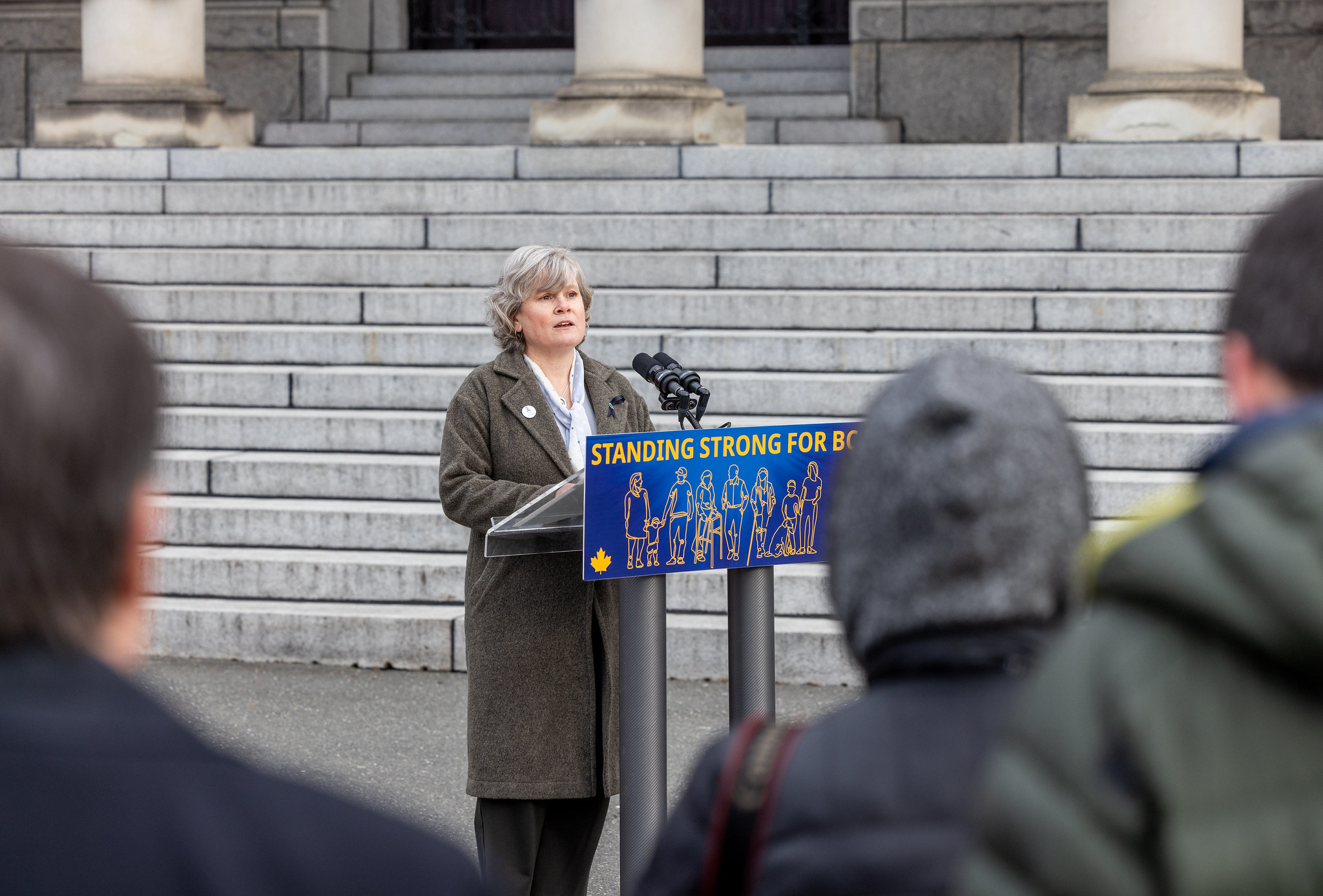
Josie Osborne announces funding for naloxone kits. Photo: Province of BC / Flickr
Last year, 1,826 people in BC were killed by toxic drugss—the lowest annual total since 2020—according to the BC Coroners Service (BCCS). It’s a 21% drop compared with last year’s drug death toll, 2315, with nearly 500 fewer deaths.
Still, that’s nearly double the number of drug-related deaths in 2016—the year the opioid crisis was declared a public health emergency in BC—when 997 people died from drugs provincewide.
On the Island, 343 people lost their lives to toxic drugs, 94 of whom were in Victoria. Nanaimo had the second-highest death toll on the Island with 76, and Campbell River had the third at 43.
It’s the first time in two years that fewer than 450 people died due to drugs on the Island.
The most recent BCCS report also shared the monthly drug death toll of the last three months of 2025. On the Island, 28 people died in December, 25 in November, and 30 in October. Approximately half of these deaths occurred on the South Island.
Stay connected to your city with the Capital Daily newsletter.
By filling out the form above, you agree to receive emails from Capital Daily. You can unsubscribe at any time.
Youth drug deaths (18 years old and younger) increased slightly to 26, up from 21 in 2024. This is still lower than the number of youth deaths in 2021 through 2023.
While the drop in the number of deaths is a positive trend, the loss of life has still been felt deeply among Victorians. On Thursday, a community memorial was held at St. John Divine Church to honour five people who were killed by toxic drugs in the city over the last month. The next memorial is scheduled for March, and already, there are six people to honour.
Last month, the BC CDC and Island Health put out an advisory about medetomidine, a veterinary sedative, that was appearing suddenly in the street supply and was causing an increase in overdoses provincewide. Days after the BC CDC warning, VicPD said 15 non-fatal overdoses—attributed to medetomidine—had occurred within 24 hours.
The BC government announced this week it would put $50 million towards 400,000 take-home kits of naloxone (also known as NARCAN). Half of these will be nasal naloxone, an alternative to the injectable form. The drug is a safe and powerful antidote to an opioid, such as fentanyl, overdose—it’s close to 100% effective in reversing these types of overdoses.
But naloxone doesn’t work for all drugs. The danger of the toxic drug supply is the unpredictability of drug concentrations and mixtures.
In 2024, Capital Daily reported that paramedics were finding overdoses harder to treat as an increase in benzodiazepines began showing up in the street supply. They were linked to nearly half of all Island drug deaths.
But in 2025, these concentrations shifted. Cocaine appeared more on the Island in the BCCS’s expedited toxicology testing than in any previous year—it was detected in 63% of drug deaths. Fentanyl was tied to 77% of Island drug deaths, down from 85%, and bromazolam, one of the most common benzodiazepines, was detected in only 32% of Island drug deaths.
These changes show how rapidly the street supply can evolve.
“The poisoned supply means anyone—whether they’re using for the first time or have used regularly—faces the risk of a toxic-drug poisoning,” Josie Osborne, BC’s health minister, said in a statement. “Expanding access to nasal naloxone is a vital part of preventing these tragedies, saving lives and building a strong and comprehensive system of mental-health and substance-use care.”
BC ended its drug decriminalization pilot at the end of last month, stopping a three-year experiment after growing public pressure. But experts say the province ended the pilot prematurely, limiting any progress that was made.
The indications are that under decriminalization, many people were becoming more comfortable accessing supports over the three-year run, DJ Larkin, executive director of the Canadian Drug Policy Coalition at Simon Fraser University, told the Canadian Press.
Larkin said a decrease in interactions with police was an important step in reducing harm and that ending decriminalization could lead more people to use in secret, causing an increased risk of death.
“This was a decision made to follow a particular political path that’s been decided by the BC government, not one that is informed by the chief public health officer, coroner’s offices, academics, researchers, [or] people who use drugs, not informed by the experts,” Larkin told CP.
Substance Drug Checking, a UVic-run service on Cook that tests drugs for free, has confirmed it will continue to operate thanks to an exemption as an Urgent Public Health Need Site, allowing illicit substances on site.
“As BC’s three-year decriminalization pilot comes to an end, we continue to be disappointed and frustrated by the lack of effective drug policy changes,” Substance said on social media. “We’ll keep showing up just like always (as we have been since 2018), and there [are] also no consequences for our service users bringing us their samples, the same as always.
Stay connected to your city with the Capital Daily newsletter.
By filling out the form above, you agree to receive emails from Capital Daily. You can unsubscribe at any time.