Decolonizing harm reduction
How the Indigenous-led non-profit QomQem is combining traditional and modern approaches to help people struggling with homelessness.
Photo courtesy of the Victoria Foundation
Harm reduction can sometimes be a controversial topic. Many associate the term with substance use, needle exchanges, and other forms, which do fall under the umbrella of harm reduction. For frontline workers caring for the most vulnerable in our communities, harm reduction includes everything that helps keep someone safe, especially if they are unhoused, struggling with mental illness, or substance use.
“Harm reduction is basic needs, first and foremost,” said Sarah Gallard (Métis), associate director of QomQem Coastal Connections. “Someone’s health is most important.”
QomQem is a nonprofit founded in 2022 and serves primarily unhoused or precariously housed people in Greater Victoria and other parts of Vancouver Island. QomQem is unique because it is Indigenous-led and serves the community from an Indigenous perspective, combining cultural elements with research-backed harm reduction methods.
“QomQem translates to Strong in several Coast Salish languages, including SENĆOŦEN, lək̓ʷəŋən, and HUL’Q’UMI’NUM’,” the nonprofit’s official website says. The organization is “rooted in Indigenous teachings related to building and maintaining strong connections to the self, to communities, and to the territories around us.”
Stay connected to your city with the Capital Daily newsletter.
By filling out the form above, you agree to receive emails from Capital Daily. You can unsubscribe at any time.
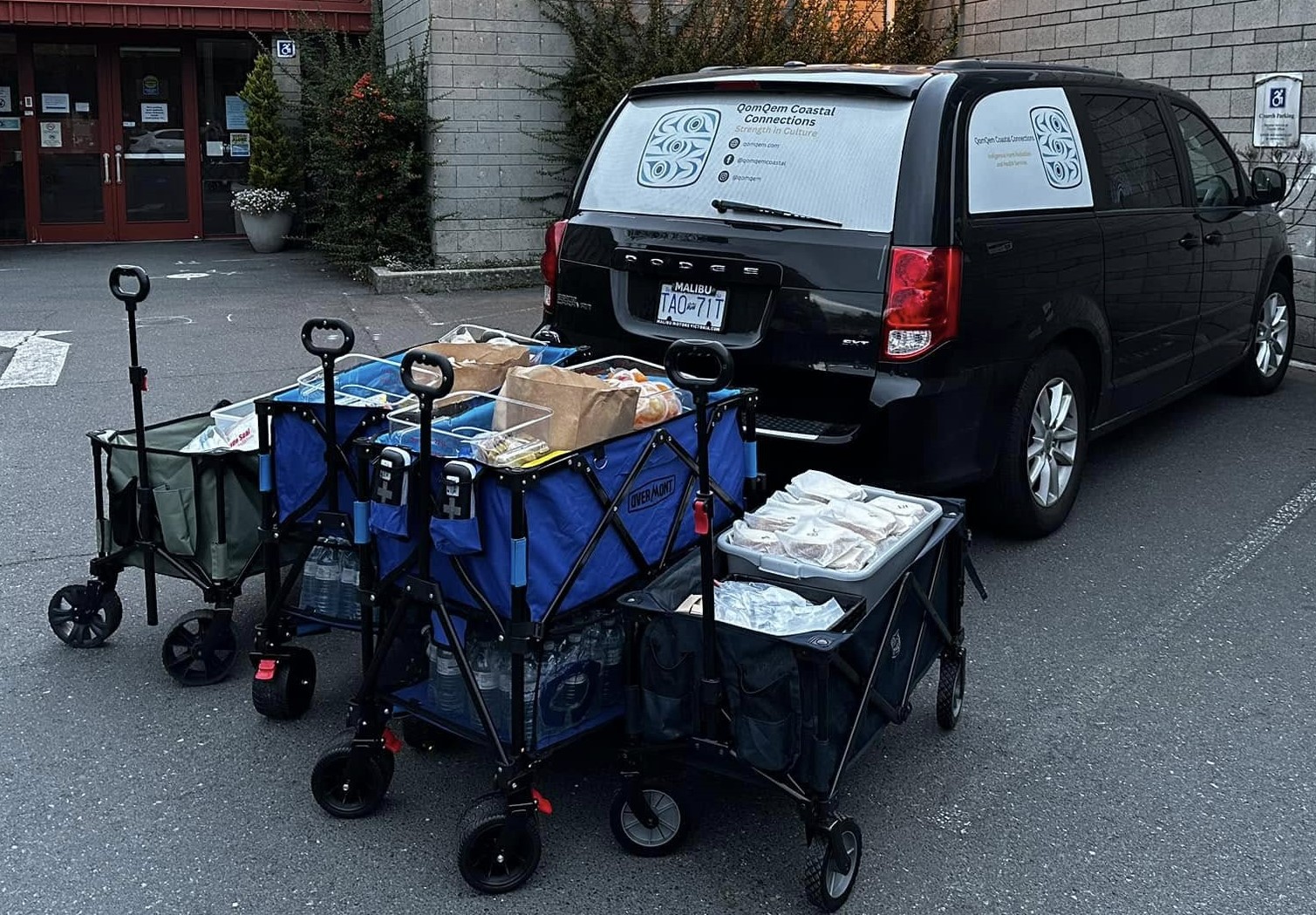
QomQem’s approach to harm reduction involves providing life’s essentials to people who need them. Providing nutritious food to someone who is unhoused is a form of harm reduction. Harm reduction includes basic healthcare, such as a checkup by a nurse, wound care, antibiotics, and even providing warm, clean clothing to ward off the cold.
Justina Seymour (Tsartlip First Nation) joined QomQem in 2022 and is currently the nonprofit’s cultural and wellness manager. She has witnessed the team grow over the years from a very small group of three workers and 10 peer workers.
“I love being able to use my culture at work to help in the community. I have helped build up a team of culture workers and represent the three nations on the Island,” Seymour explained. “Our culture includes brushers (with cedar), smudge drummers, elders, traditional medicines, keepers, dancers, and powwow groups.”
In addition to the traditional healing ceremonies, QomQem partners with Island Health. A nurse practitioner goes into the community every Thursday, with QomQem staff, to provide healthcare services, like STI testing or wound care, to people who are unhoused or in precarious housing conditions. QomQem also connects them with housing opportunities and other services.
“If somebody has a bad wound on their leg and doesn’t want to go to the hospital, the nurse goes. We go with the nurse and try to help them out, or help them get to a doctor, if it’s beyond what the nurse could do. I also offer smudging on those days while we’re on outreach,” Seymour said.
Over the years, QomQem has seen an increase in demand for their services, as more people struggle with rising living costs and precarious housing. They sometimes see 80-100 people per shift, and with four shifts a week, it can be a lot of work.
“And that’s for everything; housing and paperwork, healthcare, food, one-on-one check-ins and small group gatherings,” said Amalia Paterson-Andino, QomQem’s administrative coordinator and program manager.
With this amount of work every week, the QomQem staff ensure that they take care of themselves and each other through cultural practices, such as brushing, that can help with burn out.
QomQem staff also have regular healing and team-building days, and recently received a grant through the Victoria Foundation to support their quarterly healing days. The healing days often include gatherings, good meals, and ceremonies such as cedar brushing.
“We come together as a team to support one another and uphold one another, so that we can also do that for the community,” Gallard said.
Stay connected to your city with the Capital Daily newsletter.
By filling out the form above, you agree to receive emails from Capital Daily. You can unsubscribe at any time.


.png)

.jpeg)