Saanich council votes to borrow $93.4M for new operation centre
The decision comes months after a failed AAP to borrow $150M.
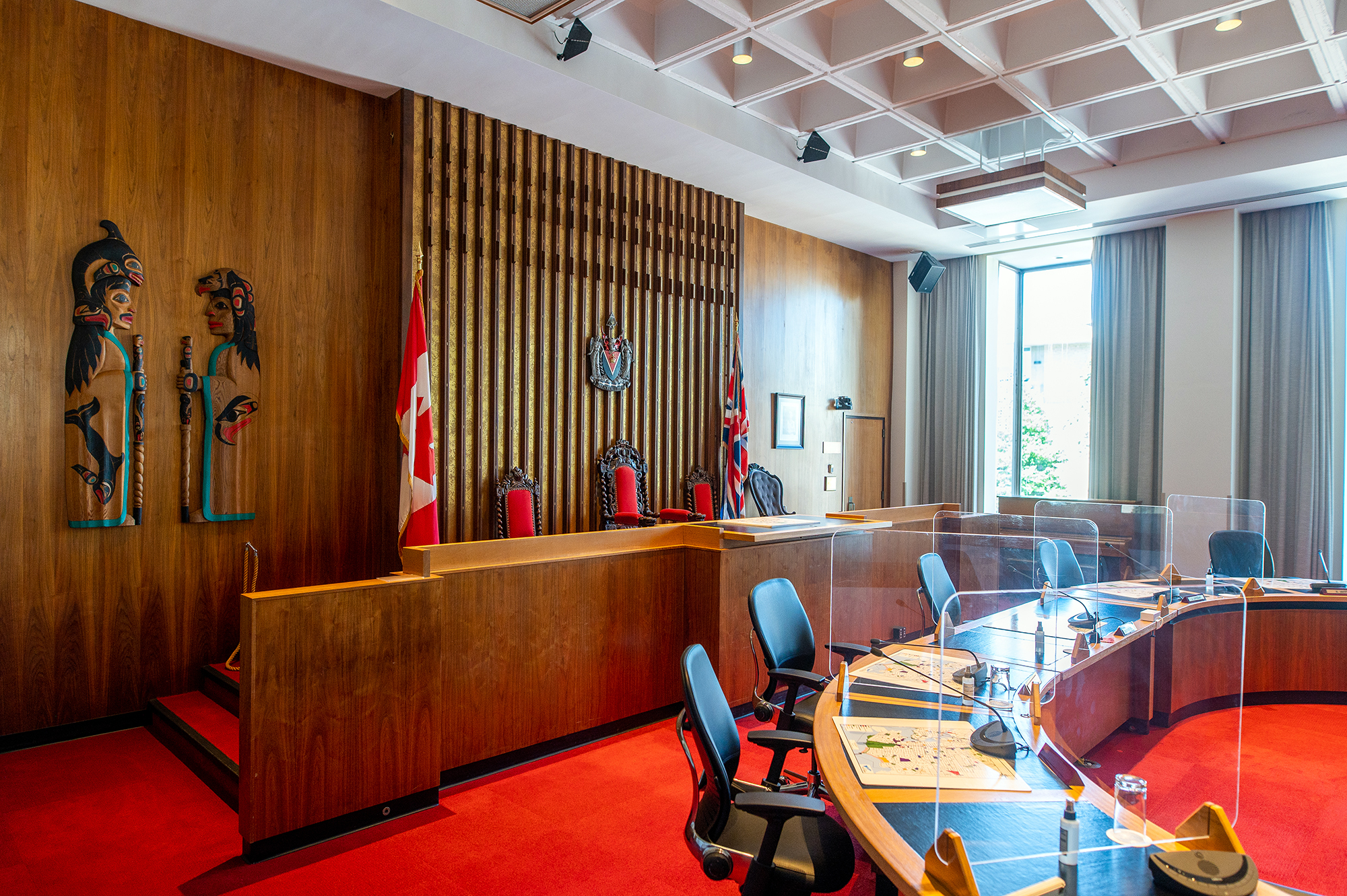
Saanich Municipal Hall. Photo: Michal Klajban / Wikimedia
After a failed alternative approval process (AAP) and scaling back the scope of its plan, Saanich council has voted to borrow $93.4M to fund the first phase of its new operations centre.
The council initially sought to borrow $150M to pay for the entire project—now broken into three phases—and put the decision to Saanich voters through an APP last summer. This process would have allowed the $150M plan to move forward without a referendum, so long as less than 10% of residents submitted votes against it.
That didn’t happen—12% of voters said no to borrowing that sum. Save Our Saanich, a group against the AAP, led a campaign to have those in opposition cast their vote.
The group argued that the AAP didn’t allow all residents the opportunity to share their opinions. Instead, it called for a referendum or for the question of borrowing to be included on the ballot of this fall’s municipal election.
Stay connected to your city with the Capital Daily newsletter.
By filling out the form above, you agree to receive emails from Capital Daily. You can unsubscribe at any time.
But Saanich’s council and staff have stressed the urgency of building a new operations centre as soon as possible. Last summer, a spokesperson for the city told Capital Daily that a “delay of even a year could result in the project cost increasing by more than $17M.”
After the failed AAP, staff went back to the drawing board. In November, the council voted to break the project into phases, with the first costing $93.4M.
On Monday, the council greenlit borrowing the funds for the first phase, which is expected to happen incrementally over five years. The cost and timelines for the following two phases have not been determined yet.
Councillors aired their grievances about the project’s growing cost during this week’s meeting, arguing that it can’t be put off any longer.
“Staff have been working very hard to manage and reduce costs; every month that goes by is [a] further risk of cost escalation and an additional challenge to our long-term financial sustainability as a district,” said Coun. Zac de Vries.
“It's projects like this that need to be managed very carefully, because they're so essential for core service delivery that every resident relies on.”
Approximately 300 municipal staff members are based in the current 65-year-old operations centre, managing water, parks, and infrastructure. Replacing the building was identified nearly a decade ago as a top priority for the city, along with an upgraded fire hall.
“Our staff are working in substandard conditions, and all you have to do is take a tour of some of those trailers [staff work in at the centre],” Coun. Judy Brownoff said. “Heaven help you if you’re over six feet.”
Coun. Teale Phelps Bonderoff lamented the fact that the phased-approach did not allow for affordable housing, which was part of the $150M plan, but said the new direction is a “good start.”
According to a staff report, the district’s current five-year capital budget in the 2025-2029 Financial Plan includes the original $150M cost projection, but this will be updated in the 2026-2030 Financial Plan.
Council will determine at a future meeting how the borrowed debt will be paid off.
Stay connected to your city with the Capital Daily newsletter.
By filling out the form above, you agree to receive emails from Capital Daily. You can unsubscribe at any time.






.jpg)