BC civil servants begin their job action with downtown rally
Negotiations began in January to replace a collective agreement that expired on March 31.
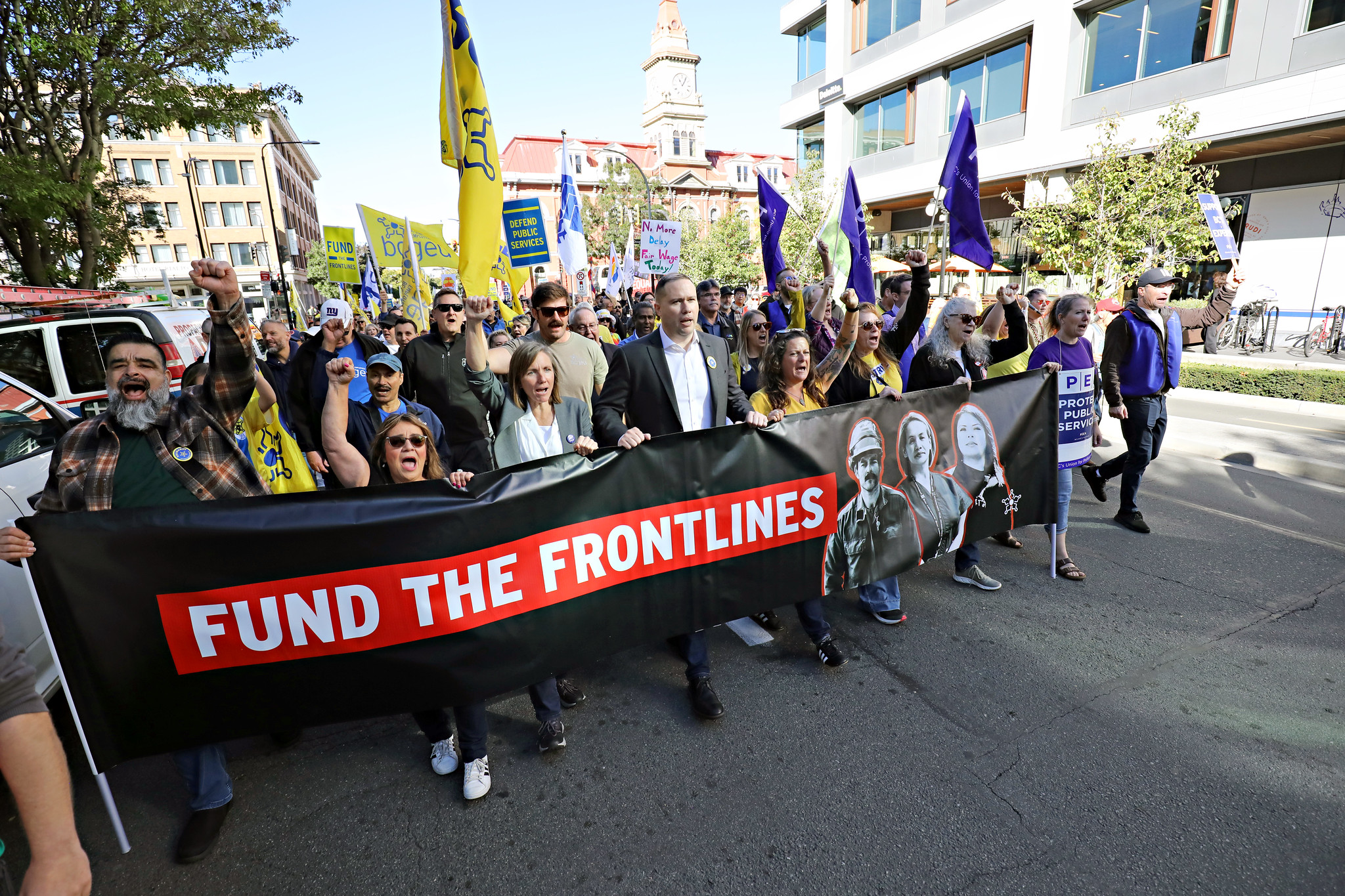
BCGEU members rallied yesterday in downtown Victoria. Photo: Mark Brennae / Capital Daily
Armed with 92.7% membership support in a job-action mandate, members of BC’s public service hit the picket lines yesterday and vowed to remain on strike “as long as it takes” to try to leverage pay increases and a new collective agreement from the province.
A full-scale strike would affect health care, social services, liquor and cannabis distribution, prisons and courts, and government administration.
Union president Paul Finch said he wouldn’t “advertise what our strike strategy” will be, but said you can bet that will change.
“That will escalate over the coming days or weeks,” he said.
Talks between the BC General Employees' Union (BCGEU), representing 34K+ government workers, and the provincial government broke down in July over key issues that included wages, telework, and a modernized contract, according to a union release.
Negotiations began in January to replace a collective agreement that expired on March 31.
“You can call a government pro-labour [or] whatever you want—that doesn't change the facts that they haven't come to the table,” Finch said.
“They're not addressing the needs of working people in this province.”
Stay connected to your city with the Capital Daily newsletter.
By filling out the form above, you agree to receive emails from Capital Daily. You can unsubscribe at any time.
When asked how long British Columbians can expect job action to run, Finch drew loud cheers with his response: “As long as it takes to get fair wages in the public service.”
Pay increases are the top priority
What is fair for the BCGEU is far to the province. A CHEK story said the union is proposing what amounts to an 8.25% wage increase over two years. The province is thinking 3.5% over two.
Finch said union members typically earn 2.7% less than the average wage in BC.
“There's a gap here,” he said.
Poll results suggest public appears supportive of workers
“Polls show that the general public agrees with us on that,” he said, referring to the findings of a Leger poll recently commissioned by the BCGEU, which found 74% of those asked agreed “that given the rising cost of living, it’s reasonable to consider a salary increase for frontline public service workers in BC.”
The government says it's really tight for cash right now but Finch says it's not the public service's fault the provincial deficit is projected to be $10 billion.
“What created this deficit is poor governance, overspending on capital projects, tax breaks for the wealthy, tax breaks on key resource projects that every British Columbian should be receiving benefit from.”
He said civil servants on average, make $45K less a year than their managers—who he says micromanage.
“Government needs to do better. They're out of touch, not just with our membership, but with the general public," he said.
Finch also said management ranks have grown at almost twice the rate of the province’s actual front-line workforce.
“That's unacceptable,” he said.
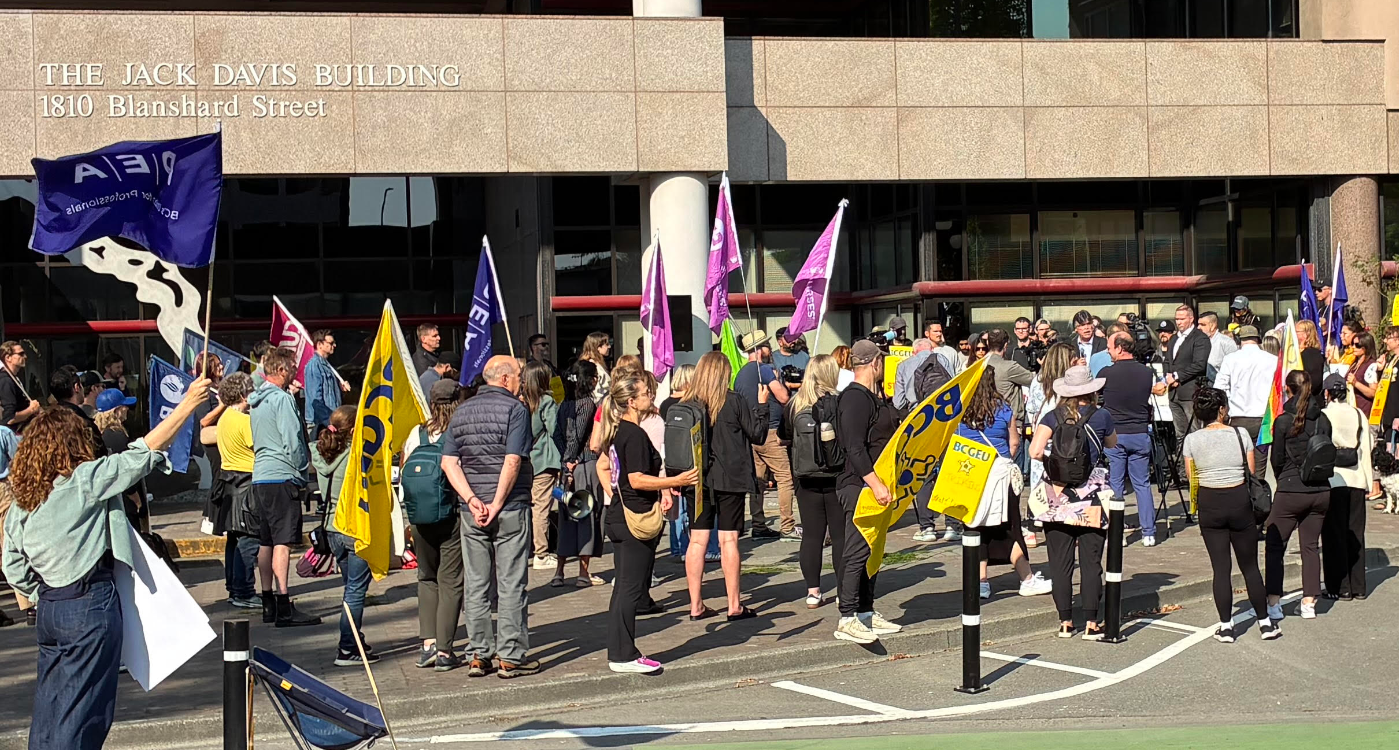
An estimated 100 workers waved flags, held placards, and chanted, “When we fight, we win,” yesterday morning on Blanshard in front of the Jack Davis Building, which houses Ministry of Energy and Climate Solutions offices.
Pickets cheered the horn honks from passing vehicles, and enjoyed doughnuts and coffee at the rally near the Save-on-Foods Memorial Arena.
PEA union also on the picket lines
“I think we have the support of the people of British Columbia, so I would encourage you all to keep up the support, and we'll see you on the picket lines,” Melissa Moreau, of the Professional Employees Association (PEA), told the crowd.
The PEA represents more than 1,800 licensed professionals working across the province, including engineers, foresters, geoscientists, psychologists, and other specialized experts.
“It is a great honour for me to stand here knowing that both unions are united in their fight for fair wages, because the services that they provide and the work that they do to maintain the critical infrastructure that this province needs to grow, [are] so important,” Moreau said.
The PEA pledged to follow the BCGEU in taking a strike vote and serving 72 hours’ strike notice, which they did on Friday.
“In our 50-year history, this chapter has been on strike once,” Moreau told the crowd.
“Enough is enough, though,” she said, to loud cheers and applause.
The BCGEU said to expect picket lines in the same locations today (Wednesday, Sept. 3) as they were yesterday: one in each Prince George and Surrey, and six here in Victoria, including in front of the Jack Davis Building, Yates Centre at 836 Yates, and the Royal BC Museum.
Stay connected to your city with the Capital Daily newsletter.
By filling out the form above, you agree to receive emails from Capital Daily. You can unsubscribe at any time.


.jpeg)