Over the weekend, Carl Olsen and his son Adam Olsen, former BC Green MLA for Saanich North and the Islands, visited Goldstream Park to fish for salmon in the same location from which their ancestors would harvest each fall.
As they waded into the cool stream, catching salmon on their annual spawning run, a black bear approached the other side of the stream, no more than 40 feet from the two men. But the Olsens weren’t afraid of the bear, and the bear, too, seemed calm around them.
It felt like they and the bear were meant to be there at that moment, harvesting from their traditional lands like so many previous generations, Adam said.
“We know that we [have] harvested in that place forever, and the bears have harvested in that place forever, and at this time of year we're supposed to be there doing just that,” Adam told Capital Daily.
The best morning read in Victoria, bar none.
Stay connected to your city with the Capital Daily newsletter.
By filling out the form above, you agree to receive emails from Capital Daily. You can unsubscribe at any time.
“It's not an unusual experience for a human to see a bear standing on the side of a river harvesting salmon. And it's not too odd a feeling for a bear to see a human standing at the exact same time of year harvesting exactly the same salmon—that is a totally natural occurrence that's been happening at Goldstream forever.”
This deep connection to Goldstream that the Olsens—both members of Tsartlip First Nation, a WSÁNEĆ nation—and many others feel could be threatened by the province’s upcoming $162M Malahat Corridor highway expansion project.
Risking the watershed for increased safety
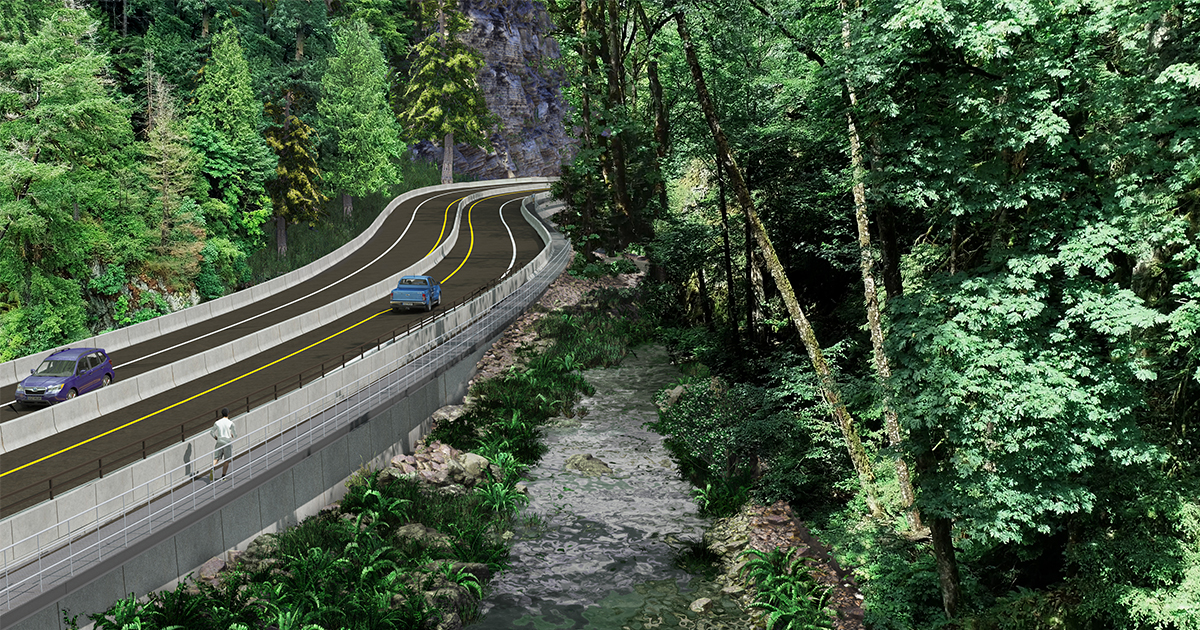
The project would add a median and a pedestrian path to the 1 km stretch of highway that cuts through Goldstream Park. It’s a section of the Trans-Canada Highway where accidents and traffic jams are common as drivers try to rush through the single-lane corridor.
But the project isn’t adding more lanes, so it would appear the bottlenecks will likely continue. Adam says that the median could also embolden people to speed through the area or text on their phone from a false sense of more safety. He and Carl say going slowly is more beneficial to the environment and that protections placed in Cathedral Grove, such as rumble strips and slower speed limits, should be implemented on the road through Goldstream.
“It's one kilometre, if we can restrain ourselves to 60 km an hour—to actually 60 km an hour—through there for one kilometre, then people would get through there safely, and then they can speed up on the other side,” Adam said.
“It's when there's accidents there from people screaming through or distracted driving going through there, that's when the chaos ensues.”
A rendering of the planned expansion. Image: Province of BC
Both Olsens say that other options—including reviving the rail system between Victoria and Duncan and offering more public transit from one side of the Malahat to the other—should be explored before committing a large sum of money for a project that appears to do more harm than good.
Mike Farnworth, minister of transportation, told Capital Daily “Safety on our provincial highways is the ministry’s top priority.”
He says a median barrier to divide the two lanes is a “valuable project,” but he understands the environmental concerns raised by those opposed to the plan.
“The sensitivity of widening the highway to accommodate this median barrier through a provincial park—a pristine watershed—is not lost on us,” Farnworth said. “That’s why the Ministry of Transportation and Transit is continuing to consult with local First Nations and stakeholders on the project to address environmental and cultural concerns.”
Years of protesting the Malahat expansion
In January, Capital Daily reported on the successful 2024 salmon runs in Goldstream. At the time, Carl Olsen had been protesting the planned highway expansion project every week for just shy of two years.
Now, nearly a year later, the project appears to be moving forward without the environmental protections Carl has been calling for.
He says environmental assessments conducted by WSÁNEĆ Leadership Council found that rock blasting in the area would negatively affect the stream’s water quality. The planned removal of 700 trees could raise the temperature of the stream by more than 10C.
While conservation—including the Goldstream Hatchery where Carl volunteers—has improved the salmon numbers in Island rivers and streams, the ecosystem and salmon life cycle are still precariously fragile, Carl says.
Hundreds join rally at the legislature
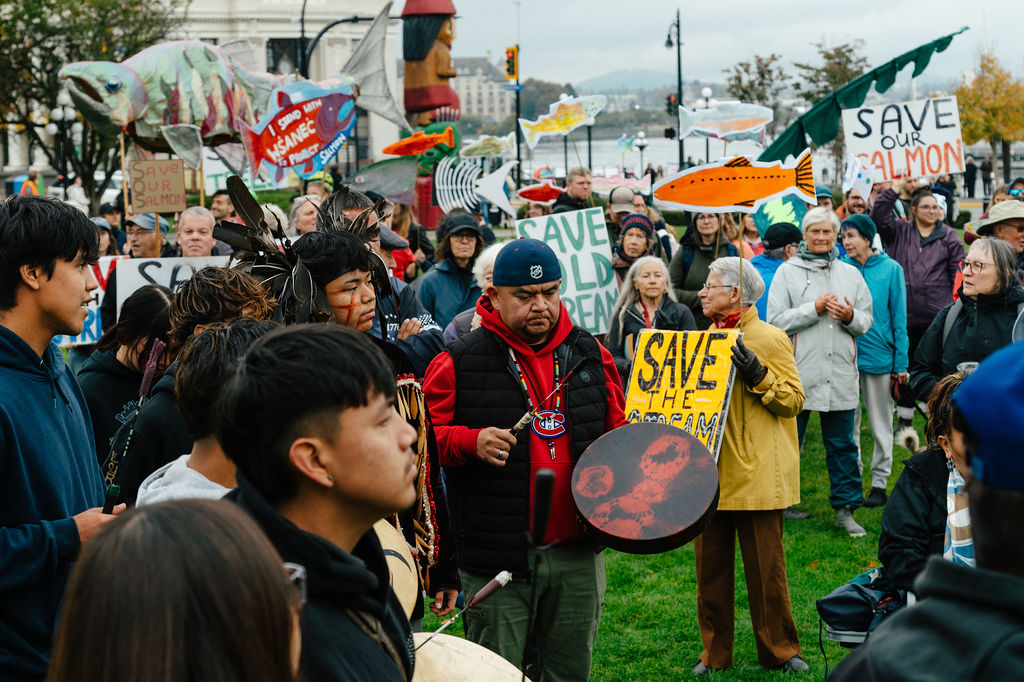
The Olsens aren’t the only ones concerned about the planned expansion—yesterday, approximately 400 people joined a demonstration on the Legislature lawns to protest the project, according to Carl.
Tobyn Neame, forest campaigner for the Wilderness Committee, says the province’s plan—and budget for it—is “against the public will.”
“The proposed highway expansion will erode Indigenous rights, damage salmon habitat, and won't make life better for people in this province like having adequately funded public transit would,” they told Capital Daily in an email.
People drum at the Save Goldstream protest. Photo: Agathe Bernard / Wilderness Committee
Neame says more than 100 people have joined information hikes in Goldstream led by the Wilderness Committee and have had hundreds more write to express their “deep dismay” with the project.
“It is clear that people care about Goldstream and are willing to use their voice to protect it,” Neame said.
Neame said that the Wilderness Committee hasn’t yet heard from the Ministry of Transportation, but they’re “hoping that it will respect and follow WSÁNEĆ leadership and work to uphold Douglas Treaty Rights, instead of destroying salmon habitat.”
Upholding the Douglas Treaties
Carl says he’s dismayed that multiple government branches approved the project.
“You have provincial parks who wouldn't allow us to even go in and clean the stream to make the water flow better. They wouldn't allow that, and now they're approving this,” he said.
“You have federal fisheries that have announced $350 million for salmon enhancement, and then they kill the stream. And then you have the [Ministry] of Transportation, that was the third party that signed it. And the plan doesn't make any sense.”
Carl says that, although the province continues to meet with WSÁNEĆ leaders about the plan, he doesn’t feel the ministry’s actions align with their promises to support the needs of Indigenous people.
A sign Carl has held at his weekly protests says “the salmon in Goldstream are protected by the Douglas Treaty.” He told Capital Daily in January that the treaty's promise to allow WSÁNEĆ to practise their hunting and fishing rights on their traditional lands was being disregarded by the province’s project.
“The treaty was signed by two groups of people: First Nations and the settlers, which means both parties are responsible for upholding treaty rights—not just First Nations,” he said.
Adam says the province and the feds have verbally committed to the rights of First Nations—in February, Canada and BC recognized the W̱SÁNEĆ Nation as the successors to the North Saanich and South Saanich Douglas Treaties of 1852—but implementing those rights seems to be an issue for both levels of government.
Calls from WSÁNEĆ hereditary chiefs to place a moratorium on herring fishing in the Strait of Georgia have gone unanswered by DFO and Parks Canada abruptly ended the Sidney Island fallow deer cull—a project that WSÁNEĆ leaders, including Carl, worked on—without Indigenous consultation. The current dispute over the Cowichan Tribe’s land title in Richmond is another example, says Adam.
“I think that, I think that it's pretty safe to say that this government doesn't really know what it's doing when it comes to. To indigenous rights and reconciliation, they say one thing and do another.”
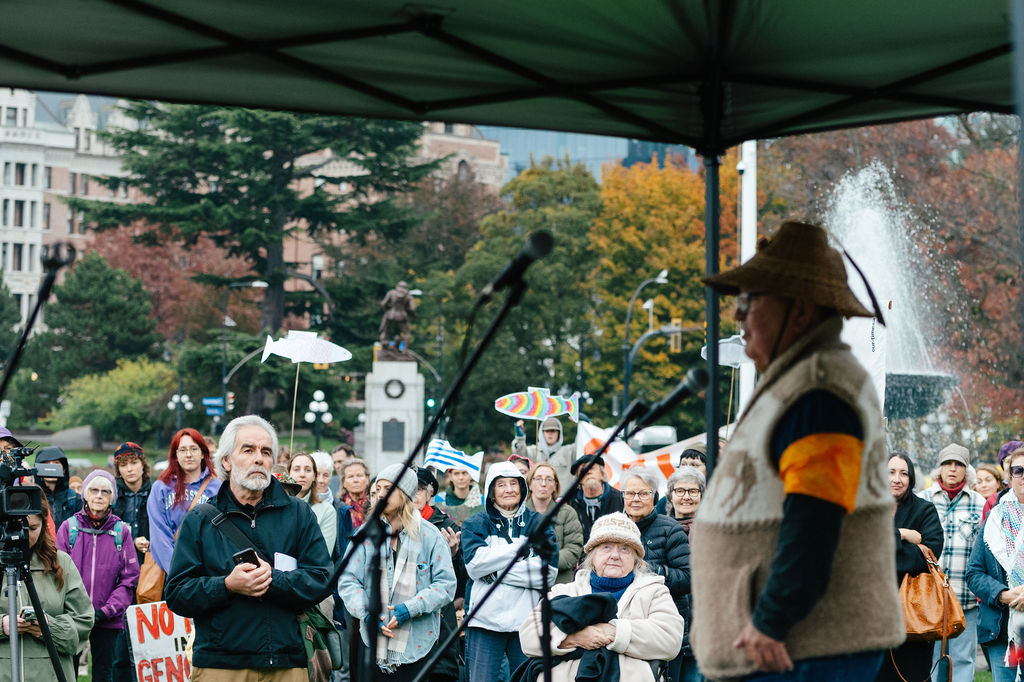
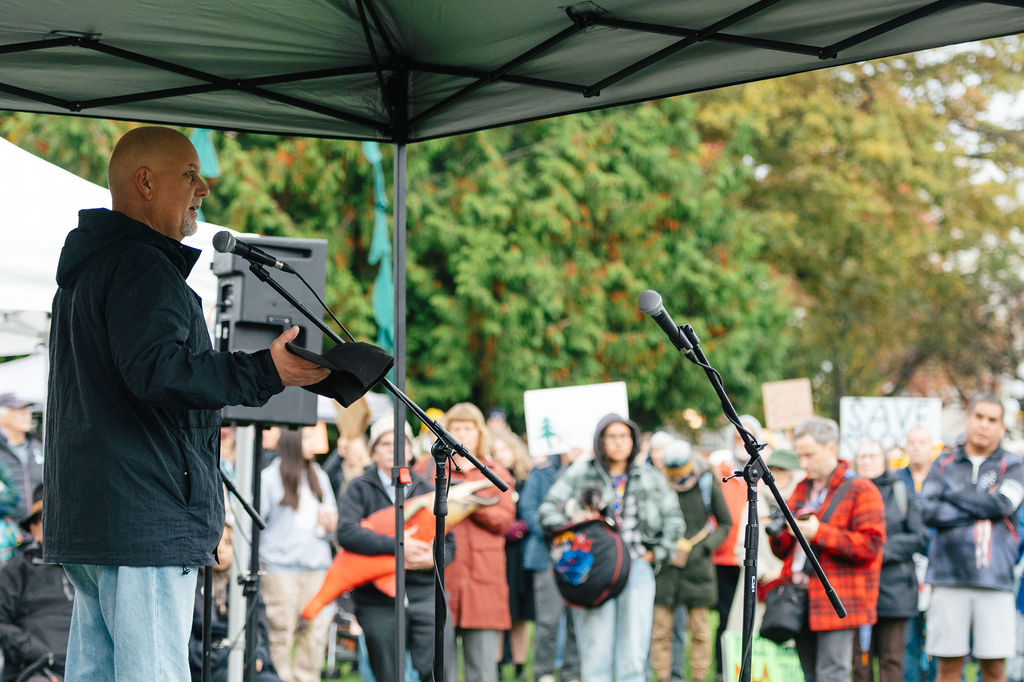
Adam Olsen speaks at Wednesday's rally. Photo: Agathe Bernard / Wilderness Committee
Protecting the stream for future generations
Carl says that he speaks with hundreds of tourists who travel from far-off continents to witness the nature of the South Island. He also educates multiple school groups through Goldstream Hatchery—there’s so much interest from educators that the hatchery has to hold a lottery for classes to keep the number of groups manageable—and says this education is invaluable to young people.
“It's a loss for everybody, you know—you're taking away that education totally that kids really need,” Carl said.
Adam says future generations could be robbed of the experience of exploring and harvesting in Goldstream and connecting to nature as more areas become urbanized.
“My dad's protest is not exclusively about First Nations’ rights—it’s about all the kids being able to experience that [education], and we're losing those moments so quickly and so often,” Adam said.
Fishing with his family alongside a bear at Goldstream was a reminder, says Adam, of the natural role people—especially Indigenous people of the Island—play in the forest’s ecosystem.
“It's one of those things that when you experience that, that's what we want our kids to be able to experience,” he said. “Really, what we're being asked to sacrifice in all of this, what we're being asked to set aside, is in exchange for a wider, faster highway.”
Victoria woman joins epic 1,375-km relay swim on the Fraser River to protect Delta’s crucial estuary
The team is rallying public support to hold Canada to its commitment to protect 30% of its lands and waters by 2030.
‘Radically different’—what deer overabundance has done to Gulf Island flora
Over the last 50 years, native black tail deer have exploded in population across the islands, including Gabriola, eating through almost all natural plant vegetation and new tree saplings in their wake.
A fungus that could wipe out Island bat colonies detected in Metro Vancouver
White-nose syndrome has devastated bat populations throughout North America—and it's inching closer to the Island.
The best morning read in Victoria, bar none.
Stay connected to your city with the Capital Daily newsletter.
By filling out the form above, you agree to receive emails from Capital Daily. You can unsubscribe at any time.



.jpeg)



.jpg)
.jpg)


