Native plant seeds from critically endangered Garry Oak ecosystems to be preserved
Seeds from the meadowlands will be preserved in the event of an environmental disaster.
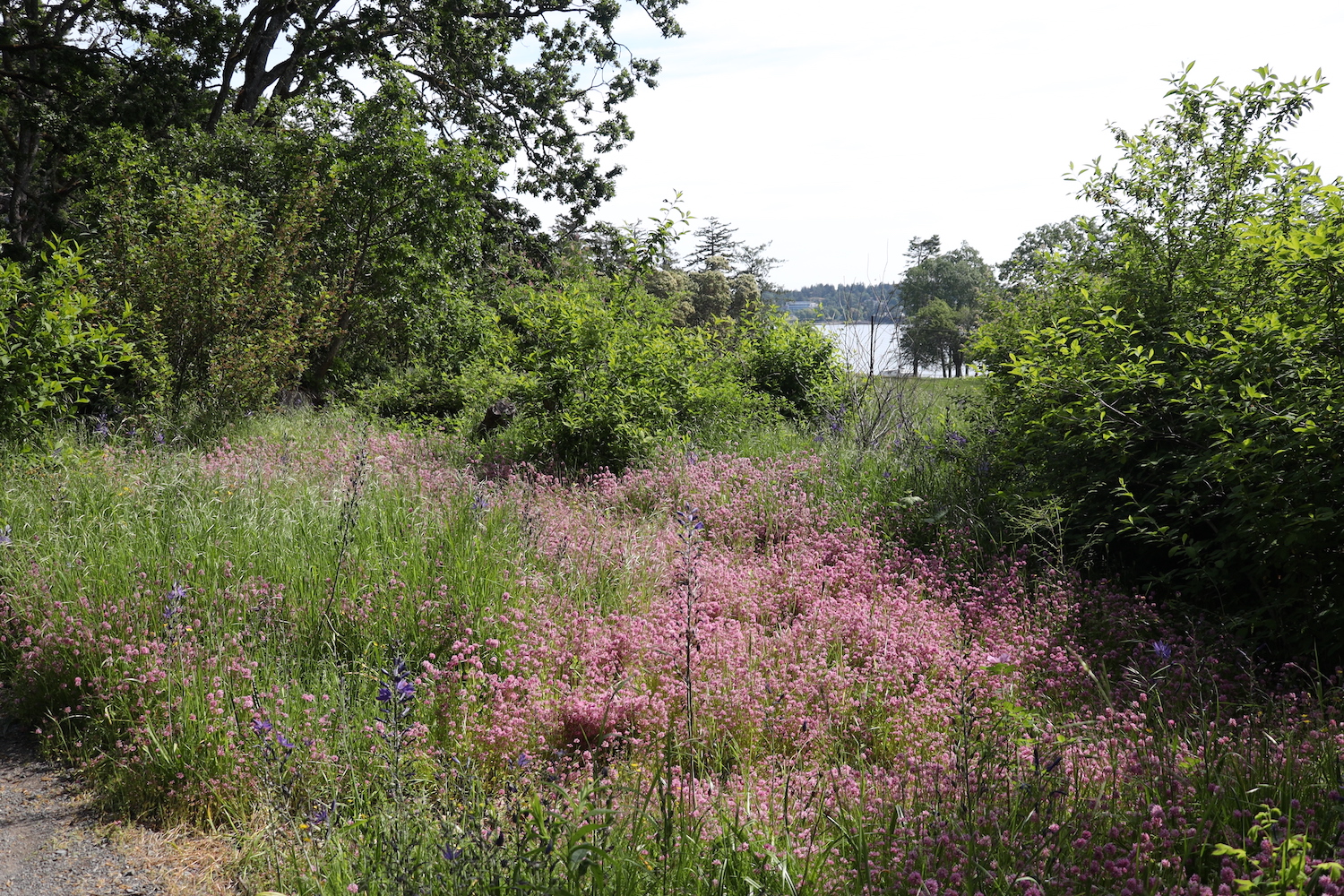
A Garry oak meadow at Fort Rodd Hill. Photo: Robyn Bell / Capital Daily
Vancouver Island and the Gulf Islands are home to some of the critically endangered Garry Oak ecosystems.
Only five per cent remains today after much has been lost to land development. These ecosystems continue to face threats including climate change, wildfires, invasive species, and urban development.
Now, a novel BC Rare and Culturally Significant Seed Bank will attempt to preserve seeds from native plant species, with the goal of repopulating critical ecosystems in the event of disaster.
The project was born out of online workshop in February 2024 and grew into the idea for a seed bank, now a multi-partner collaboration that includes the Nupqu Native Plant Nursery, the Ministry of Water, Land and Resource Stewardship, University of British Columbia (UBC) Botanical Gardens, and the Coastal Douglas-fir Conservation Partnership (CDFCP), administered by the BC Conservation Foundation.
“A clear goal and direction came, and that was to protect the genetic and species diversity of BC’s native plants,” says Stephanie Woods, program manager with the CDFCP.
Stay connected to your city with the Capital Daily newsletter.
By filling out the form above, you agree to receive emails from Capital Daily. You can unsubscribe at any time.
She says seeds from rare and culturally significant plants will be collected and preserved in off site cold storage. The cold storage, or seed bank “hubs,” will be duplicated in two locations: the Nupqu Native Plant Nursery and the UBC Botanical Gardens, to allow for back up in case something happens to one site.
Woods says the hope is to prevent species extinction, preserve their genetic diversity and provide a seed source for potential restoration or degraded landscapes, in addition to maintaining Indigenous harvest areas and sustain biodiversity in the face of future catastrophic events.
The team also has the long-term goal of developing a database and working toward data sovereignty with Indigenous Nations involved, a process that will be ongoing and take time, says Woods.
The Islands Trust Conservancy approved a $10,000 Opportunity Grant to the BC Conservation Foundation in November, which went toward matching funds for the project. The BC Parks Foundation through the BC Conservation Fund approved $200,000 in funding over two years, so long as they could match the same amount through fundraising, which they just met at the end of 2025.
The Opportunity Grant funding from the Conservancy will go in part to a second Seed Bank Network gathering event in the Spring, an honorarium for Indigenous attendees and to help with anyone with financial barriers to attend.
A portion will also go toward contractors for seed collection for priority species in Garry Oak ecosystems, shipping and seed storage cost, utilities to run the storage hubs and a small portion to the BC Conservation Foundation, who charge a 15 per cent fee for coordinating the grants and funds.
The team has already begun the specialized process of seed collecting in Garry Oak ecosystems, and collected 12,000 seeds from seven species to date. These include KEXMIN, also known as desert parsley, a plant of cultural importance to the W̱SÁNEĆ people collected with guidance from a W̱SÁNEĆ member.
Also collected are seeds from Bog Bird’s-foot Trefoil, a perennial herb found on Gabriola according to Gabriola Land & Trails Trust’s 2022 plant list.
“We’re working with specialists who are very informed on Garry Oak ecosystems,” she says. These include Indigenous members, as well as trained biologists. “They generally have an idea of where these rare and culturally significant populations are growing.”
The total $400,000 is enough to set up both cold storage facilities and conduct seed collection until March 2027. They hope to collect 10 to 15 seed species per year, ideally 20 to 25 by the March date. The freezers alone cost $5,000 each and must be kept at -18C to preserve the seeds.
“It’s really just getting the groundwork and the foundation laid right now,” Woods says. “Once we have the infrastructure working to continue to raise long term stable funding we can keep doing the work,” she says.
Stay connected to your city with the Capital Daily newsletter.
By filling out the form above, you agree to receive emails from Capital Daily. You can unsubscribe at any time.



.jpeg)


.jpg)
.jpg)


