The city already has implemented all 11 of its priority actions, with five completed, including the hiring of nine additional dedicated police officers at VicPD.
The city already has implemented all 11 of its priority actions, with five completed, including the hiring of nine additional dedicated police officers at VicPD.
Based on facts either observed and verified firsthand by the reporter, or reported and verified from knowledgeable sources.
Victoria's community safety plan on track as city continues to seek helping hand
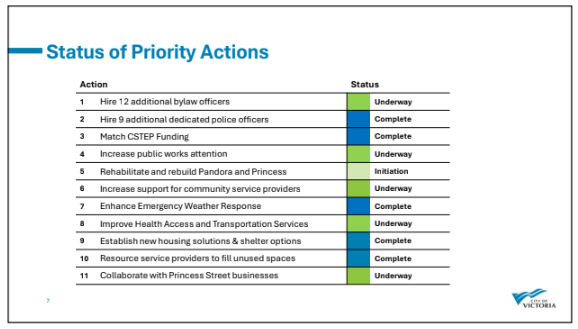
The city already has implemented all 11 of its priority actions, with five completed, including the hiring of nine additional dedicated police officers at VicPD.
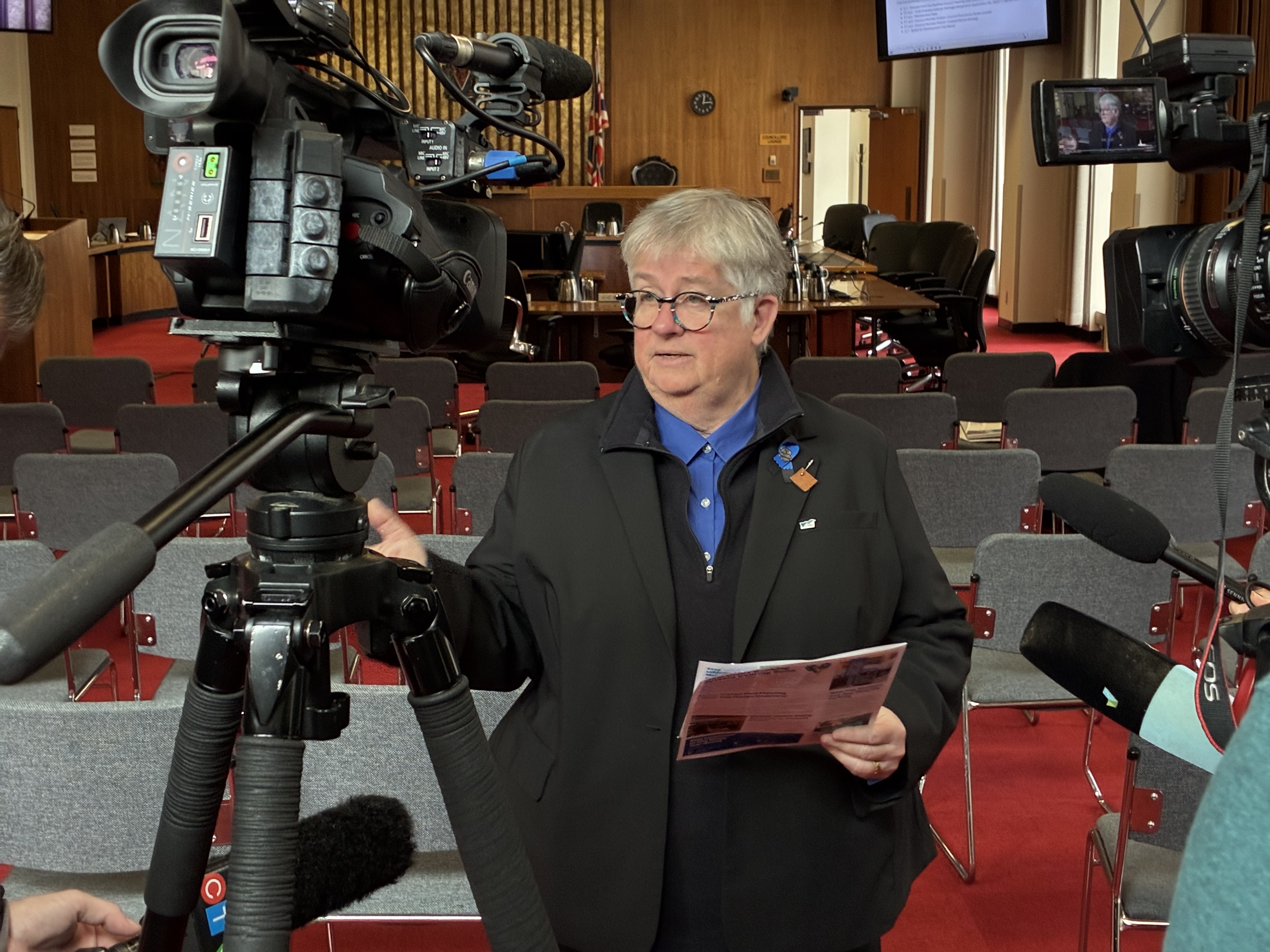
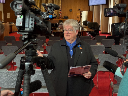
“We've done a lot, and we've done enough,” Mayor Marianne Alto said yesterday as she gave an update to the city’s Community Safety and Wellbeing Plan, now in its seventh month.
When asked for whom those words were aimed, the mayor responded it was a message to anyone who’s listening, but it wouldn’t be outrageous to presume she hoped some of her colleagues in surrounding municipalities were among them.
“We have high expectations that we have demonstrated how to do this work, how to balance this work, how to pay for this work, how important it is, and that now it is for others to use these examples and take the lead in their own communities.”
The city’s $10.35-million, 99-point plan was designed to address complex social challenges the city faces with street crime, drug use, and homelessness and the concerns and frustrations of the public, including business owners.
It includes a mandate to fill gaps and find solutions in housing, healthcare, service delivery, policing and attention to downtown in terms of cleanliness and serving business owners.
The strategy was unveiled in July, and it seems to be on or ahead of schedule.
The city already has implemented all 11 of its priority actions, with five completed, including the hiring of nine additional dedicated police officers at VicPD.
The best morning read in Victoria, bar none.
Stay connected to your city with the Capital Daily newsletter.
By filling out the form above, you agree to receive emails from Capital Daily. You can unsubscribe at any time.
Other aspects of the plan include increased cleaning of downtown streets of litter and graffiti through an urban clean team and a community cleanup of Pandora, Princess and Ellice. The blue fencing on Pandora is coming down soon, too, Alto said.
Two community safety field hubs are expected to open next month—one at 999 Pandora, the other at 709 Douglas.
“The important thing about them being located in those two places is that they bring a visibility, a presence, an acknowledgement that those two areas right now require some concentrated services,” Alto said.
The hubs aren’t mini-police stations, but rather spaces where uniformed officers can establish that presence.
Victoria's Community Safety and Wellbeing Plan to-do list. Courtesy of the City of Victoria
Victoria feels it does the heavy lifting on supports
When it comes to providing social care for the area’s most vulnerable, the Victoria council has long lamented that the capital city does the lion’s share of the work.
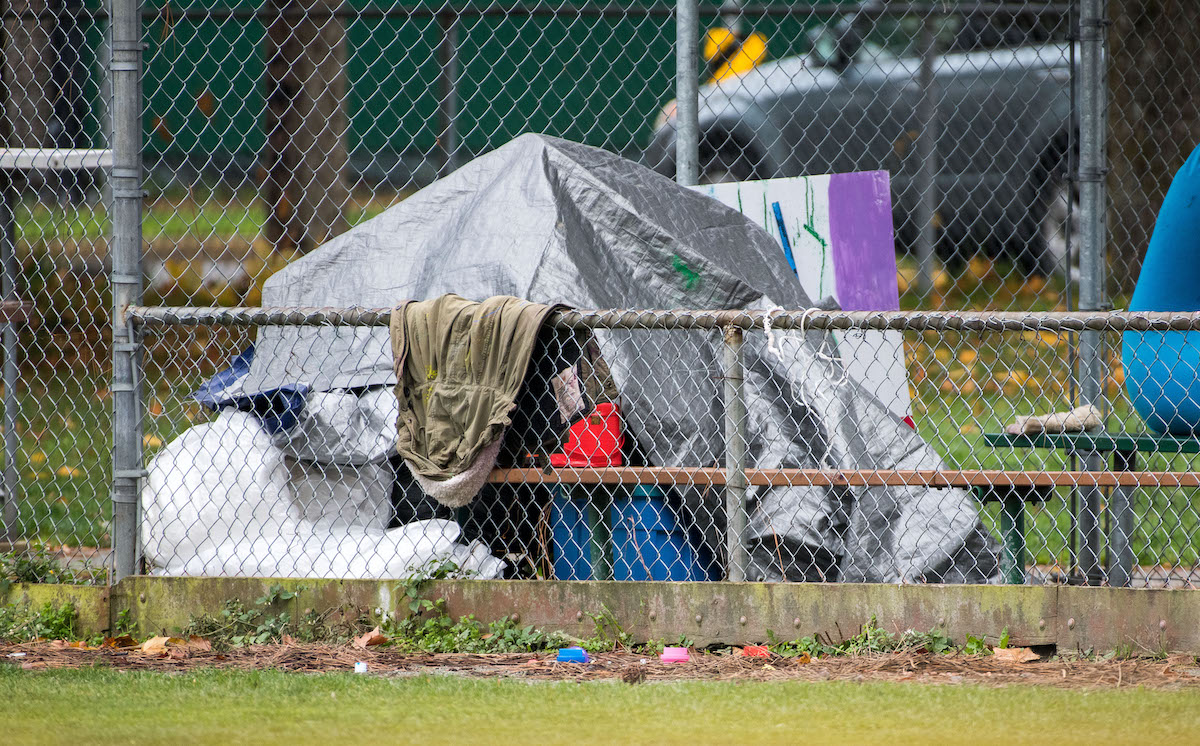
Just Tuesday, it announced plans for another shelter—an all-day refuge of 34 spaces at 2920 Bridge for those now living on Pandora or nearby Ellice.
“We've now created 97 new spaces for people to go off the street—different degrees, different places, in their recovery journey and their various journeys,” Alto said.
Victoria has roughly 440 shelter spaces—and it looks like that’s going to be it.
Alto took the opportunity to announce that the province’s HEARTH program—that stands for Homeless Encampment Action Response Temporary Housing—has come to an end for Victoria.
Since 2024, the city has utilized the initiative to help fund eight projects to increase indoor spaces for unhoused people. It appears the Bridge shelter will be the last for now.
“In that sense, that's an indicator for us that we've done a whole lot, a lot more than I think that anyone would expect for a city this size, in a region like this,” Alto said.
Point-in-Time Count was 1,749 last year
According to the 2025 Greater Victoria Point-in-Time Count conducted last March 25 and 26, at least 1,749 people were experiencing homelessness across the Capital Region, an increase of 84 souls. And like a magnet, many gravitate to Victoria, where many of the area’s social services are available.
Saanich recently doubled its shelter capacity to 50 spaces, and Sooke and Salt Spring Island offer a handful of extreme weather response spaces, but Victoria supplies somewhere between 80% and 90% of the area’s shelters.
Alto said she is heartened by what happened earlier this month in Sidney, where a recent policy shift has cleared the path for the town’s first temporary shelter site, a year after its council rejected a proposal to open one in a seniors’ housing facility.
“I think it's a great example of how their residents said, ‘No, we need to do something, and we have our own people here who are needing this type of health help, and so let's do something,’" Alto said.
“That evolution is remarkable and should be lauded.”
16 orgs to share $750K from feds
The city also announced yesterday that it has been awarded $750K from the federal government to support Victoria’s new Spark Program to prevent crime and violence for at-risk young people under the age of 30.
The city will work with 16 organizations that will split the money and deliver 19 projects—such as counseling and mentorship—over the next three months.
Spark projects also help to develop youth skills, provide employment supports and increase youth access to arts, culture, and recreation activities, the city said in a release.
Victoria's community safety plan on track as city continues to seek helping hand
The city already has implemented all 11 of its priority actions, with five completed, including the hiring of nine additional dedicated police officers at VicPD.
Victoria’s 2025 Point in Time count found 1,700+ unhoused
The report found notable shifts among Victoria's homeless community, including a rise in safety concerns around shelters and an increase of substance use.
Victoria reallocates $10M to deal with downtown street crime
“This is exactly the type of thing our members have called for, which is increased foot patrols, among other things, from VicPD,” Jeff Bray, DVBA chief executive officer, told Capital Daily.
The best morning read in Victoria, bar none.
Stay connected to your city with the Capital Daily newsletter.
By filling out the form above, you agree to receive emails from Capital Daily. You can unsubscribe at any time.


.jpeg)