Climate experts: the Island’s early heatwave was notable, but not a major cause for concern
It’s too soon to say whether this spring heatwave will lead to summer droughts and increased fire risk, says BC Wildfire Service
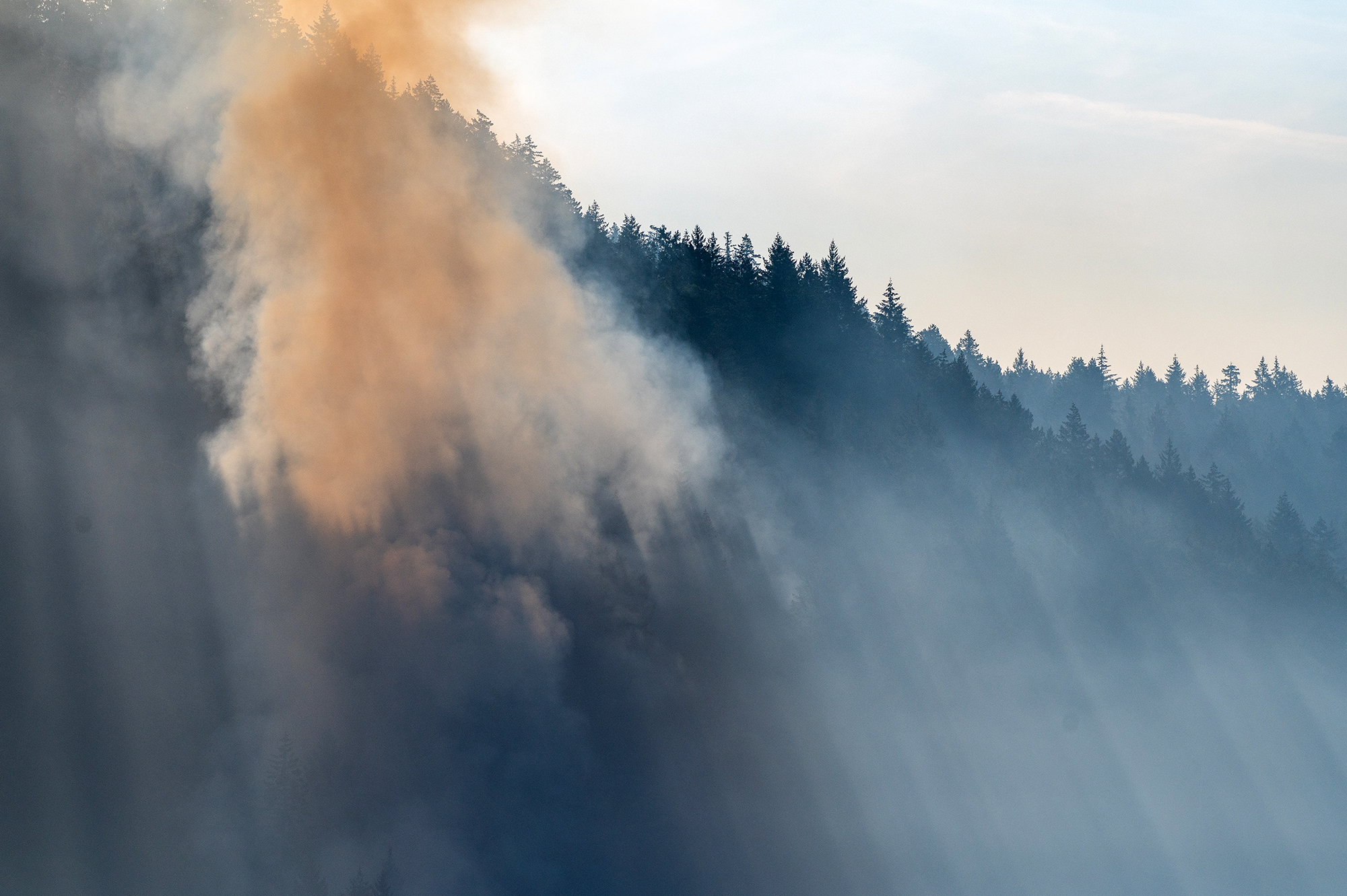
Finlayson Arm fire in 2022. Photo: James MacDonald / Capital Daily
Last weekend’s hot temperatures may have brought some early beach days, but they also raised alarm bells for those concerned about climate change.
That unease had some merit—31 wildfires were sparked across BC, including two on the Island. Another wildfire was detected yesterday near Nanaimo.
BC Wildfire Service (BCWS) has indicated it will be putting various campfire bans in place in the province starting Thursday, including in the Coastal Fire Centre.
In April, researchers warned that the Island’s low snowpack—it’s one of the only regions in BC to have a snowpack below half of the average level this year—could indicate upcoming summer droughts, which can increase wildfire risk.
But local climate experts want to assure people that this weekend’s springtime heatwave isn’t necessarily our new normal and it may not be an indicator of a brutally hot summer.
Jennifer Lohmeyer, BCWS information officer for the Coastal Fire Centre, says this year’s wildfire trends are “not atypical for Vancouver Island.”
So far, the Island has recorded 12 wildfires in 2026, all of which have been caused by humans or unknown factors. It’s not clear yet whether this summer will bring more blazes than usual.
“While the Coastal Fire Centre has experienced a warming and drying trend for the past three weeks, it is too soon to determine what type of fire season we will have,” Lohmeyer told Capital Daily.
How severe this fire season gets will depend on how much rain the region gets in May and June.
Stay connected to your city with the Capital Daily newsletter.
By filling out the form above, you agree to receive emails from Capital Daily. You can unsubscribe at any time.
Charles Curry, a UVic researcher and regional climate impacts lead at the Pacific Climate Impacts Consortium, says the record-breaking temperatures over the weekend were remarkable because they were a novelty.
On Sunday, Victoria’s Gonzales Point recorded its highest temperature for that date in 123 years, and Port Alberni—the Island’s usual hotspot, says Curry—recorded its highest in 66 years. But the previous days didn’t topple any temperature records.
Curry says this one-day exception doesn’t mean every future May will kick off with mid-summer weather.
“Year-to-year variability in the temperature on a specific day means that we don’t expect this temperature to become typical—it’s a new record, after all,” Curry told Capital Daily.
Curry and his colleagues are instead keeping an eye on the overall upward creep in the province’s mean temperature. This more subtle shift could indicate that records won’t be broken once a century, but rather once every few decades.
“The fact that mean temperatures are increasing throughout BC year-round due to global warming indicates that record-breaking high temperature extremes are becoming more likely than they were in the past,” Curry said.
“In other words, we might expect more single-day high [temperature] records to fall in the coming years.”
Stay connected to your city with the Capital Daily newsletter.
By filling out the form above, you agree to receive emails from Capital Daily. You can unsubscribe at any time.





.jpg)