Local First Nations and municipalities explore potential Island Rail revitalization
Songhees and Esquimalt Nation will lead the initiative, exploring the feasibility of a rail system between Victoria and the Westshore.
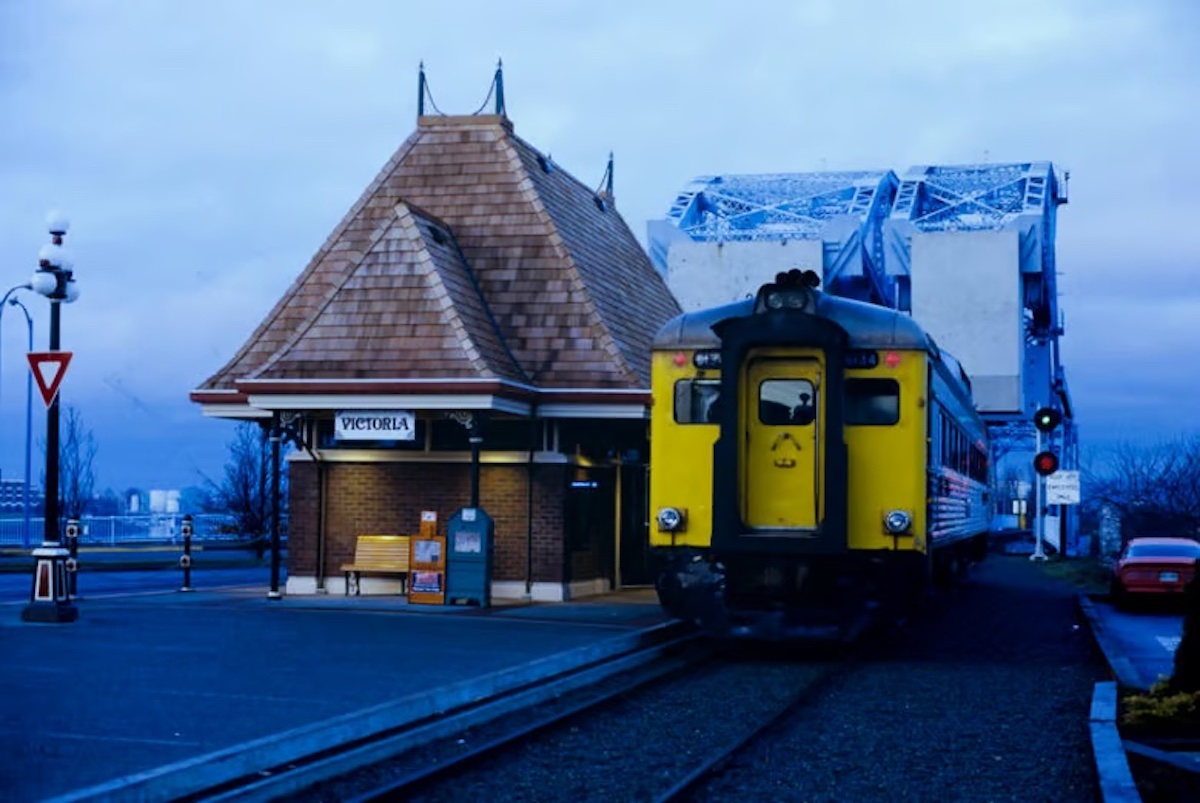
The E&N Dayliner at its southern terminus on the old Blue Bridge circa 1986. Photo: BC Archives
The much-talked-about return of the Island Rail Corridor just got one step closer to becoming a reality. A coalition of Lekwungen Nations and CRD municipalities have agreed this week to explore the feasibility of a rail system that connects Victoria and the Westshore.
Esquimalt Nation Chief Jerome Thomas and Songhees Nation Chief Ron Sam were joined by representatives of the CRD, Victoria, Esquimalt, View Royal, Langford, and Colwood to sign the agreement, which multiple attendees called “historic.”
It could be a solution to the “Colwood Crawl” and the increasing congestion between Victoria and Westshore communities. As the western municipalities continue to grow, finding solutions for people commuting throughout Greater Victoria has become a pressing topic.
Stay connected to your city with the Capital Daily newsletter.
By filling out the form above, you agree to receive emails from Capital Daily. You can unsubscribe at any time.
Two weeks ago, a revitalized discussion of a ferry between Victoria and Royal Bay was shut down by Colwood council, who says more research is needed. A 2019 study on the Victoria-Westshore ferry found the transit option would provide few potential revenue benefits.
The Reconciliation Corridor Initiative (RCI) will be led by the Lekwungen Nations. Part of the agreement focuses on a realignment of the corridor to redirect the railway away from existing residential areas of the Esquimalt Nation’s reserve lands and a return of rail land to the First Nation.
The initiative will also explore economic opportunities tied to the rail system, including transit-oriented development, that could benefit the Nations.
The return of Island Rail is still far from being a sure thing—RCI partners are commissioning a technical feasibility study to examine the aforementioned topics, with results slated to be released in the next 12 to 16 months. The findings will then be shared with other regional transportation organizations.
Reconciling past wrongs
Chiefs Sam and Thomas say the initiative provides hope for reconciling a historic wrongdoing.
The rail was built through the reserve lands of both First Nations without warning or consent. Last year, the Songhees Nation filed a lawsuit against the federal government, which it says should have immediately cleaned up the rail lands after it shut down operations in 2014. It also claims that while the railway was in operation it contaminated the land with chemicals, coal, ash, gasoline, and cinder.
The Songhees people were forced off their reserve land at Songhees Point when the rail was built in 1886—a clause in the Indian Act allowed this—and had to relocate to the current reserve at Admirals.
“For the Lekwungen People, the story of the railway began in a time when our lands were taken and our voices were not heard,” Sam said in a release. “That brutal history can’t be separated from this conversation. But as we look to the future of reconciliation, this next chapter starts with Lekwungen leadership.”
Thomas says the agreement recognizes Esquimalt Nation's historic land title, while also helping to find solutions to ongoing traffic problems.
Island Rail revitalization not supported by all Island First Nations
The entire Island Rail Corridor stretches from Esquimalt to Courtenay. Its creation has been called the “Great Land Grab,” as 800,000 ha was privatized by the Canadian government without Indigenous consent.
The Snaw-naw-as Nation in Nanoose had a portion of rail land returned in 2023. It has since filed a suit against Canada, calling on the feds to clean up the land (or compensate the nation for doing this work). The Nation didn’t wait for a decision to begin the cleanup and has removed a 1km portion of the disintegrating tracks.
Cowichan Tribes Chief Cindy Daniels says the nation wants the rail lands that run through their Koksilah and Somenos reserves to be returned to be used for housing—not rail, transit, or recreational trails. With the removal of tracks in Nanoose, she says the return of Island Rail in the Central Island is unlikely.
Stay connected to your city with the Capital Daily newsletter.
By filling out the form above, you agree to receive emails from Capital Daily. You can unsubscribe at any time.


.jpeg)