Tsartlip Nation among First Nations filing court challenges against Pacific Link Pipeline project
The nation says meaningful Indigenous consultation about the project has not happened, despite its fast-tracked approval.
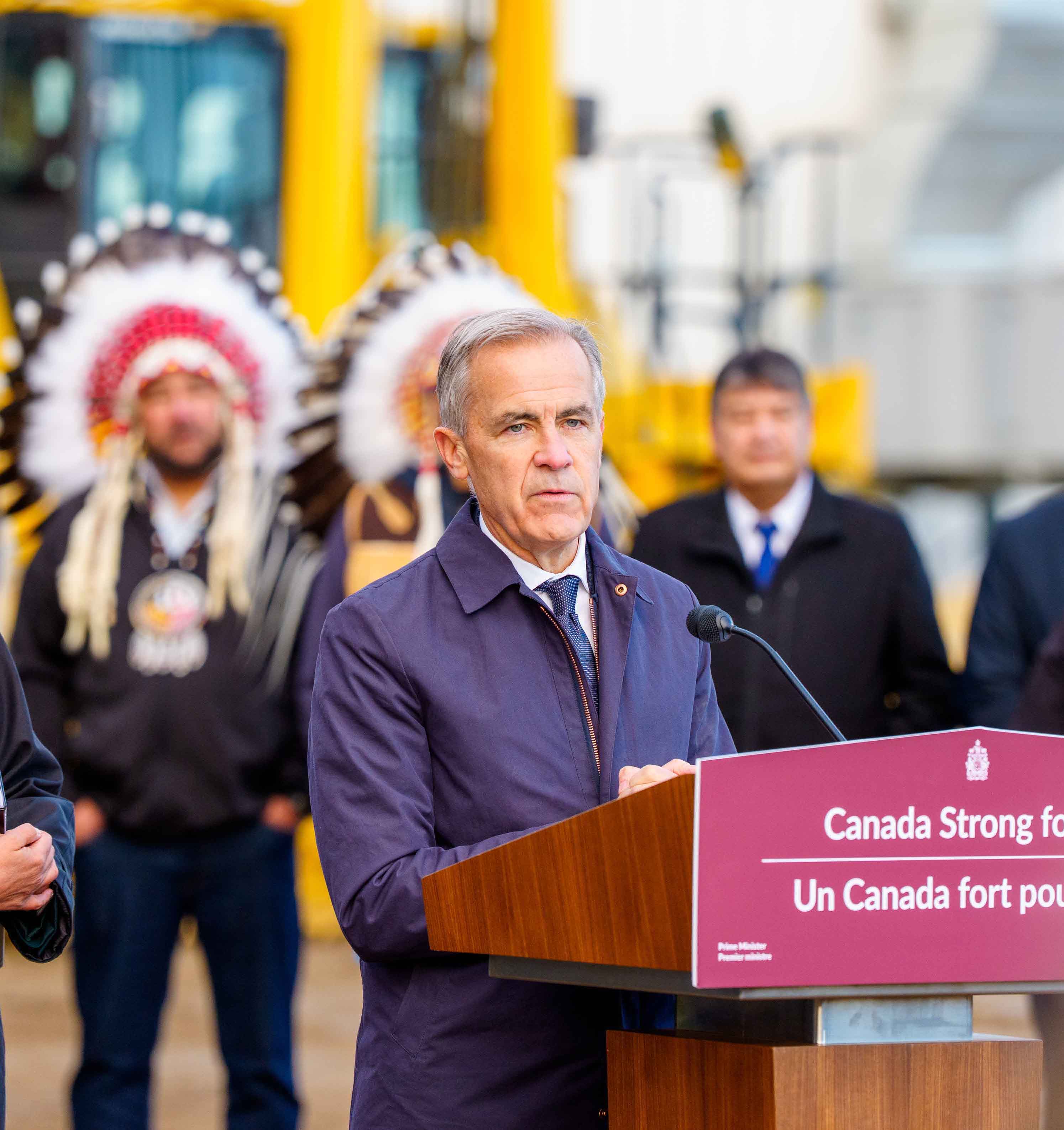
Prime Minister Mark Carney, alongside Alberta Premier Danielle Smith, announces the Pacific Link pipeline as a project of national interest. Photo: Lars Hagberg / Government of Canada
Tsartlip (W̱JOȽEȽP) First Nation has joined Indigenous communities across BC and Alberta in challenging Canada's decision to fast-track a new West Coast pipeline.
The Pacific Link Pipeline, which is listed as a project of national interest under the Building Canada Act, would transport 1M barrels of crude oil per day from Bruderheim, Alberta to a port in Delta. The pipeline is expected to increase tanker traffic in the Salish Sea as the oil is shipped to markets in Asia.
Under the Building Canada Act, select projects are streamlined by receiving all federal approvals at once. The act requires Canada to maintain consultations with affected First Nations throughout a project's planning process, including before it is deemed of national interest.
The pipeline was the first project to be listed under the act, with its designation announced last month. Last week, the federal government listed Roberts Bank Terminal 2, a three-berth shipping container terminal in Delta, as the second project under the act.
On Friday, Tsartlip First Nation, a W̱SÁNEĆ nation, filed an application in federal court for a judicial review of the Pacific Link project's requirements, including whether Canada must "meaningfully consult" with the nation before designating a national interest project in its territory.
Stay connected to your city with the Capital Daily newsletter.
By filling out the form above, you agree to receive emails from Capital Daily. You can unsubscribe at any time.
Tsartlip Nation defined meaningful consultations as providing clear information about the project and its potential impacts on Indigenous communities—something the nation says hasn't happened yet.
Tsartlip Chief Curtis Olsen said the First Nation intends to hold Canada to the promises made more than 170 years ago in the Douglas Treaties, which guaranteed W̱SÁNEĆ people could continue to live on the land and water as they always have.
"Now, the federal government has essentially given approval to all the permits of an oil pipeline and terminal before there are specific details about the project,” said Chief Olsen.
Adam Olsen, former BC Green MLA and spokesperson for Tsartlip Nation, said going to court is not a decision the First Nation takes lightly, but it wants to ensure the pipeline—and any other project listed under the Building Canada Act—follows the required regulatory processes.
"How this decision is made will shape every one that follows, for our people, for future generations and for every community, First Nations or otherwise, that could be next," Adam said in a statement.
Several other First Nations recently filed similar requests for judicial reviews of the project, including seven in BC and one in Alberta.
All of the applications for review highlight the lack of Indigenous consultation prior to listing the project under the Building Canada Act and key information missing from the proposal, including the route of the pipeline, which has yet to be determined.
“You don’t decide first and look at the facts later,” said Adam. “Canada set the lowest possible standards in their decisions, and then failed to meet the factors they told us would be criteria for making the decision."
Stay connected to your city with the Capital Daily newsletter.
By filling out the form above, you agree to receive emails from Capital Daily. You can unsubscribe at any time.