UVic releases groundbreaking study on the cost of the 2014-2016 marine heat wave
The Blob reshaped how ecosystems in the Pacific Ocean functioned—and climate change makes it likelier that these extreme weather events will return
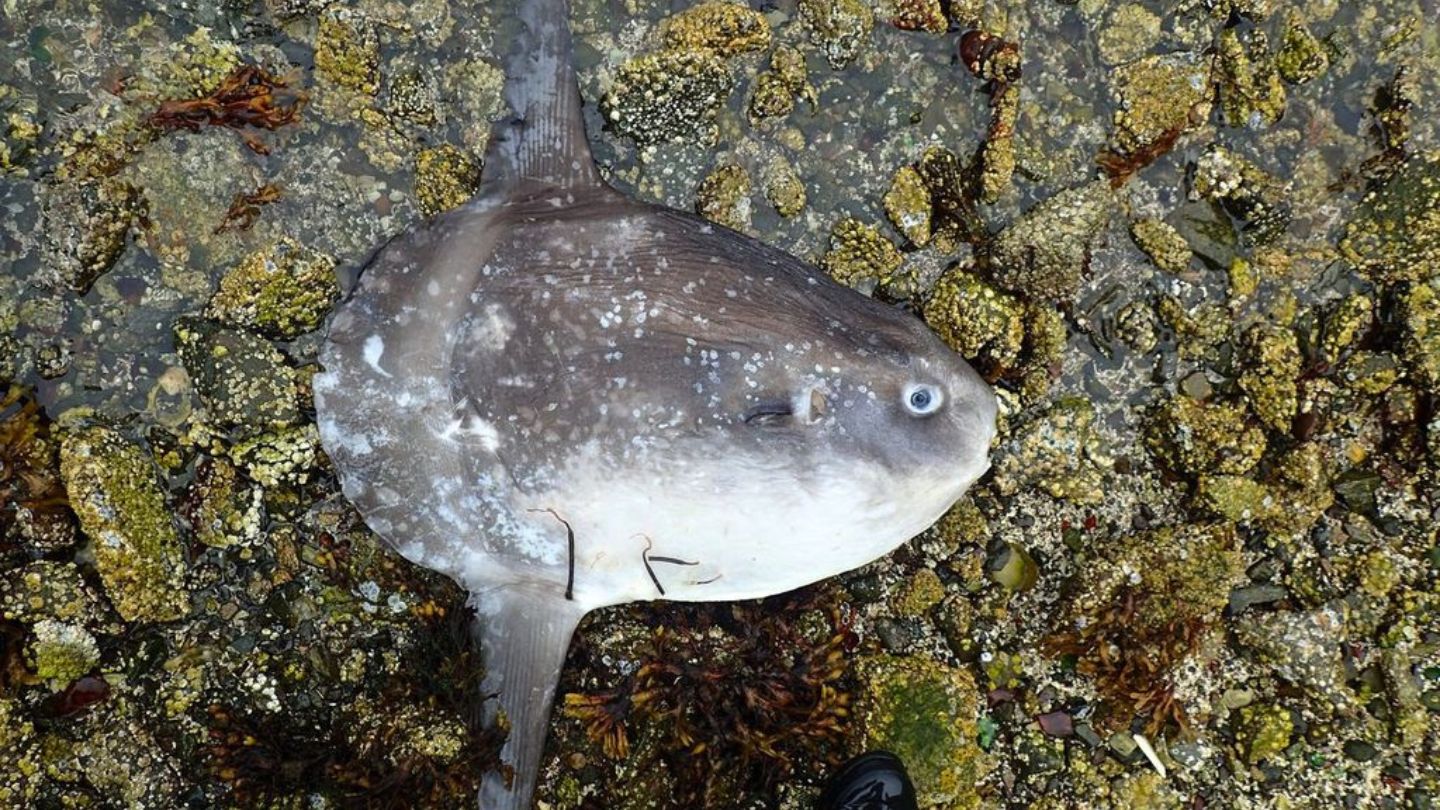
A mola mola, a tropical fish found in warm waters, was found washed up in Bamfield. Photo: Kristina Tietjen / UVic
The ocean hasn’t been the same since The Blob.
The widespread marine heat wave, known as The Blob, spread throughout the Northeast Pacific Ocean from Mexico to Alaska, damaging life in its wake as it grew larger (not unlike the 1958 horror classic of the same name).
It was the longest-running heat wave of its kind. Years after it ended, coastal areas in this region still haven’t returned to their former selves.
Tropical fish, like the mola mola, were found in Bamfield. Essential species—like our coastal predator, the sunflower sea star—were pushed to the brink of extinction.
Similarly devastating marine heat waves have continued to occur since The Blob—right now, two particularly harmful ocean heat waves are happening in the Mediterranean and Southern Australia, with the latter being called the “worst marine disaster in living memory”—and are likely to become more commonplace as the effects of climate change worsen.
A new comprehensive study coming out of UVic’s Baum Lab highlights how these climate events occur and what to expect in the future.
The study synthesizes all research conducted on this event, offering a big-picture perspective of how The Blob reshaped ecosystems. The paper cites hundreds of authors and examines the effect on ecosystems along North America’s Pacific coast.
Stay connected to your city with the Capital Daily newsletter.
By filling out the form above, you agree to receive emails from Capital Daily. You can unsubscribe at any time.
‘One of the best documented climate events on record’
A marine heat wave (MHW) is classified as a period where water temperatures exceed the 90th percentile of historical average temperatures for a minimum of five days. The Blob lasted a staggering two years.
The impacts of this MWH have been the focus of multiple studies during and after the scorching event. Because it hung around so long, climateologists were able to conduct a thorough analysis of it.
The cause of The Blob, they say, was unquestionably climate change—modelling shows that this period of extreme temperatures was seven times more likely to occur than it would have prior to anthropogenic (human-caused) greenhouse gas emissions. Modelling also shows that future hot spells will occur more frequently.
The Blob came about quickly and without warning; on the Oregon coast, the ocean temperatures “increased by nearly 7C in one hour,” according to the study, highlighting the unpredictability of these extreme weather events.
Kelp forests show resilience near the Island
Kelp forests were severely impacted in most regions hit by The Blob.
Seastar wasting disease—an epidemic that began in 2013 before The Blob, but is believed to have accelerated and spread further during the heatwave—began to spread like wildfire.
This made the sunflower sea star functionally extinct in some of its natural ecosystems, like Baja, California, and significantly reduced numbers near the Island. The loss of these predatory sea stars led to an increase in sea urchins, which in turn led to a decrease in coastal kelp forests.
Floating kelp forests in Barkley Sound, the Strait of Georgia, and Puget Sound experienced declines during the MHW. However, in cooler areas—like the waters on the Island’s outer coast—kelp forests remained relatively stable.
A UVic study from last year confirms this, with bull kelp near the Island found to be particularly resilient in the face of The Blob.
Environmental changes and commercial costs
The Blob caused a shift in the natural range of marine species, with many observed far outside of their usual comfort zone.
“Our review underscores that heatwave impacts manifest not only through direct physiological stress but also through significant indirect ecological impacts,” the study reads. “Changes in habitat and food availability, even if short‑lived, had cascading effects across trophic levels,” it said
Salmon life cycles were significantly impacted by the heat wave, especially sockeye salmon near the Island.
Increased algae blooms led to the biotoxin domoic acid (DA) found in marine mammals and phytoplankton from Alaska down to Baja California.
Hundreds of common bottlenose dolphins (not so common near BC) and dozens of false killer whales were recorded in BC waters—the first time the latter were recorded in offshore waters in BC.
The Blob didn’t make its appearance without impacting the economy. Declines in fish stocks led commercial fisheries to close, resulting in losses of hundreds of millions of dollars in the US alone during this time.
Monitoring must be expanded to mitigate damage from future MWHs
The study’s authors said that, while the documentation of The Blob was extensive, long-term ecosystem monitoring projects were the most beneficial in understanding the full scope of the MWH—and weren’t nearly as common as studies focusing solely on the two years.
“Many of these observed impacts would not have been anticipated by single-species models, highlighting the importance of ecosystem‑based modelling approaches for improving predictions of marine heat wave impacts,” the study reads.
The authors flagged that most research was conducted in locations near populous towns, with much of BC and Alaska poorly monitored. There was also limited information on the effects on seagrass meadows and the deep sea, despite these areas making up huge swaths of The Blob’s path.
“Continuing and enhancing ecological monitoring and observation will be essential for efforts to quantify and understand the ecological changes that are occurring in the face of climate change.”
As prolonged, multi-year marine heat waves become more common with the acceleration of climate change, the study’s authors are urging resource managers, industries, and policymakers to become “better prepared for the unexpected.”
Adaptive strategies should be put in place, including fishery closures, diversification of fish species harvested, and reducing catch limits as a precautionary measure, according to the study.
Marine protected areas—which fared better than unprotected regions during The Blob—should also be expanded, with strategic management plans in place for dealing with MHWs.
“The 2014–2016 MHW serves as a potent reminder of the fragility of marine ecosystems to extreme climate events, emphasizing the need for a concerted research effort aimed at understanding, predicting, and mitigating the impacts of such phenomena on our oceans,” the study reads.
Stay connected to your city with the Capital Daily newsletter.
By filling out the form above, you agree to receive emails from Capital Daily. You can unsubscribe at any time.


.jpeg)



.jpg)
.png)


