Victoria council wants BC marine strategy to become law
Council voted unanimously, directing Mayor Alto to write a letter urging the province to codify its strategy.
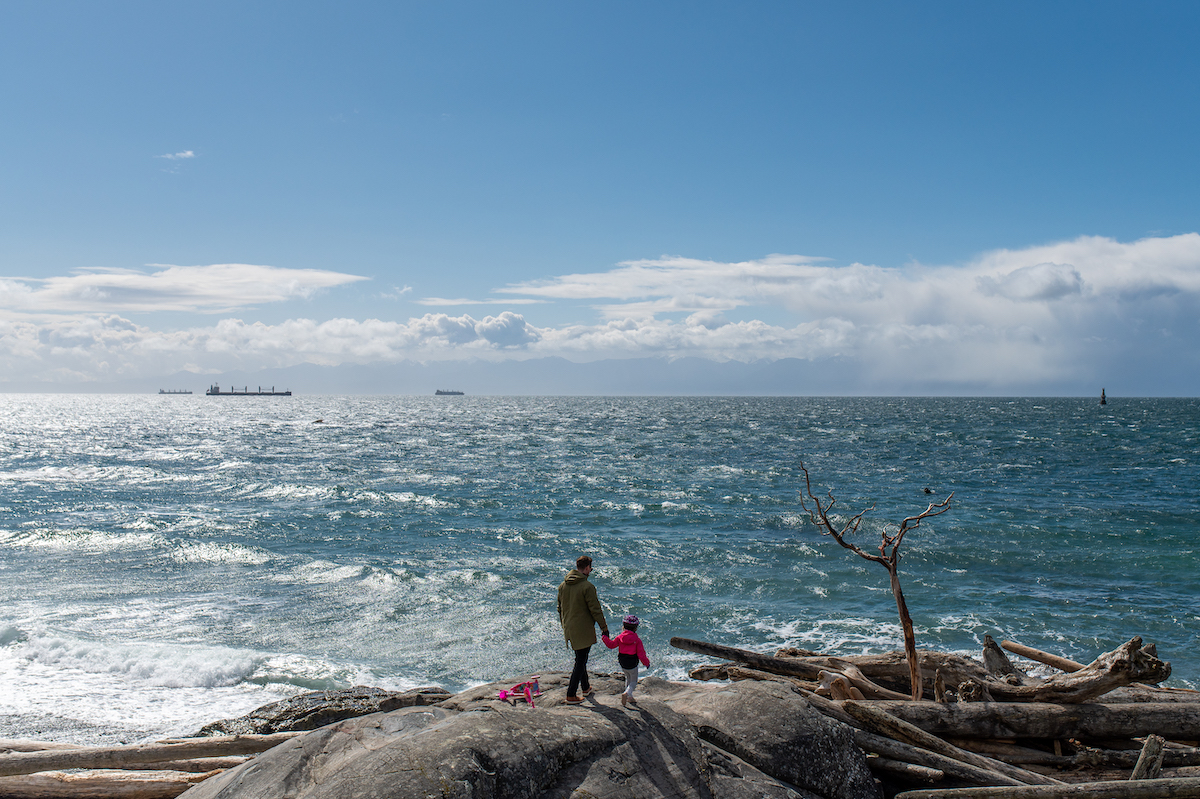
Photo: James MacDonald / Capital Daily
Victoria council voted unanimously yesterday to have Mayor Marianne Alto write a letter to BC Premier David Eby, calling on the province to enshrine its Marine Coast Strategy into law.
The motion aligns with similar advocacy from Saanich, Langford, and the Union of BC Municipalities (UBCM). Saanich and Langford councils passed motions in February to endorse codifying the strategy, and in December, both municipalities brought the same motion to the UBCM, whose executive endorsed it.
Coun. Jeremy Caradonna, who introduced yesterday’s motion, wrote that codifying the strategy is necessary to “ensure the long-term efficacy and durability of the strategy.”
After over two years of public consultations, including discussions with First Nations, the province released its strategy in the summer of 2024. The approach outlines environmental goals for BC’s coast over the next 20 years, with key pillars including habitat restoration, climate change resiliency, and economic opportunities.
The province calls it the “first made-in-BC holistic vision for the coastal marine environment.” Before its creation, BC was one of the only coastal jurisdictions in North America not to have a long-term plan in place for its marine habitats.
Stay connected to your city with the Capital Daily newsletter.
By filling out the form above, you agree to receive emails from Capital Daily. You can unsubscribe at any time.
Although the strategy includes an action plan, Caradonna wrote that, “Without legislation, these actions risk delay or inconsistent application, undermining the strategy’s vision.”
Both he and the UBCM highlight in their motions that, without becoming a law, the strategy could end up on the back burner as other priorities arise for the provincial government.
“Codifying the strategy into law would support its success and longevity rather than leaving it dependent on the priorities of the government of the day,” reads the UBCM endorsement motion.
A legal framework would set much of the strategy in stone—but endorsements for the law are coming as another major environmental legislation is put to the test.
The Oil Tanker Moratorium Act, passed by the federal government in 2019, prevents tankers from stopping, loading, or unloading cargo in protected BC coastal regions, from the North Island to Alaska.
But after a memorandum of understanding (MOU) for a northern bitumen pipeline—which would cut through northern BC—was signed by the federal government and Alberta, this ban could be lifted. The MOU commits Ottawa to adjusting the ban if a pipeline project is approved.
Many politicians, First Nation leaders, and environmental groups have voiced concerns about this—especially since BC Premier David Eby was left out of recent pipeline discussions with the feds and Alberta. Because the law is federal, Eby says there’s not much BC can do to stop Ottawa.
While a provincial law would not be at the whim of the feds, threats to the tanker ban show the precarity of environmental protection laws when they conflict with economic opportunities.
Stay connected to your city with the Capital Daily newsletter.
By filling out the form above, you agree to receive emails from Capital Daily. You can unsubscribe at any time.








.jpg)
.png)


