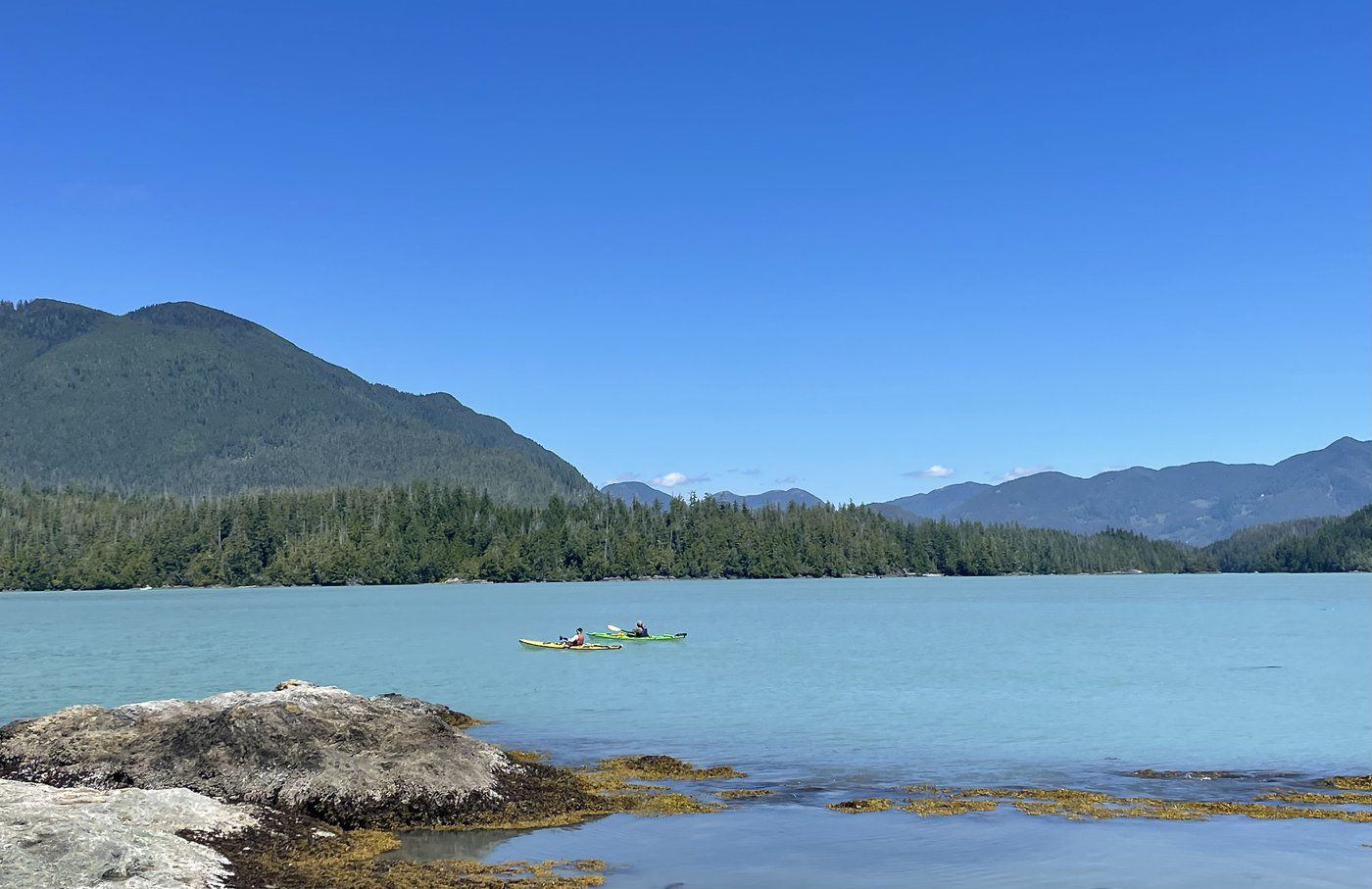
Some West Coasters say it reminds them of herring spawn. Others say it mirrors the milky blue of glacial waters or the warm palette of a tropical lagoon.
The phenomenon taking place off the coast of Vancouver Island is called a coccolithophore bloom, and according to researchers at Fisheries and Oceans Canada (DFO) Institute of Ocean Sciences in Sidney, B.C., it’s been happening more frequently since the heat waves and El Niño events that started in 2015.
“These blooms usually follow an intense heat or warming event,” said Moira Galbraith, a DFO zooplankton taxonomist, in an email.
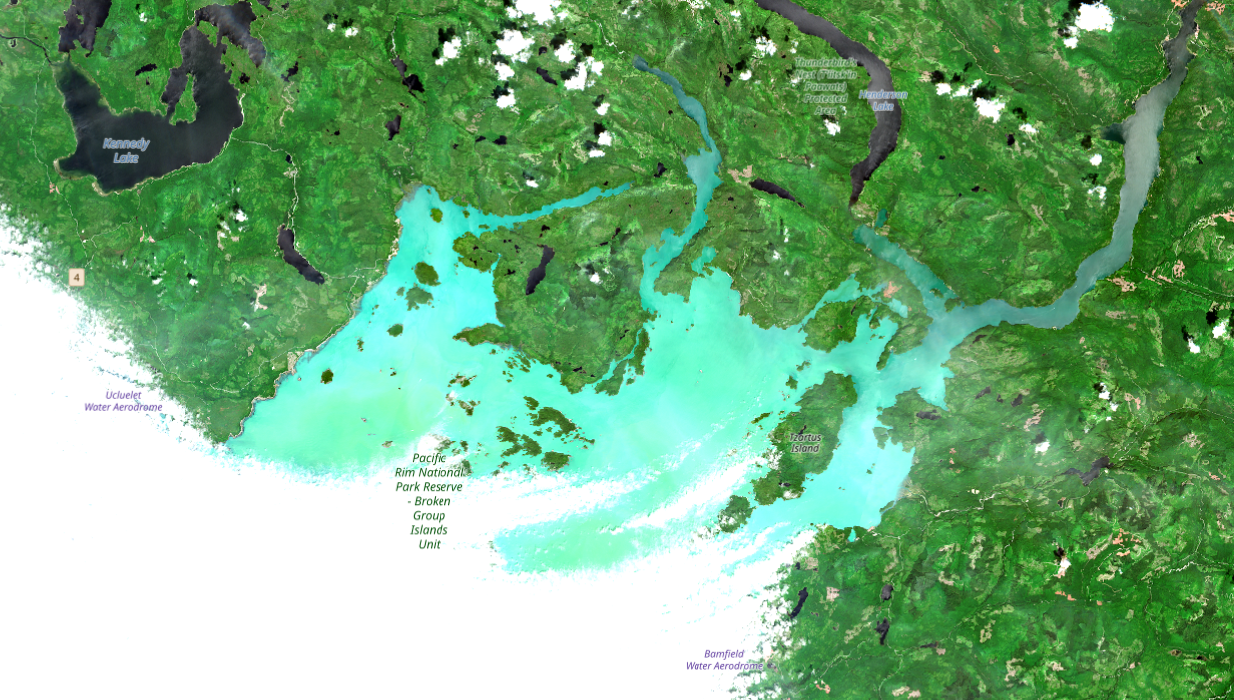
The turquoise blue waters are so bright you can see them from space. DFO researchers have been following the bloom for several weeks via Sentinel Satellite pictures from the Copernicus Program, the Earth Observation component of the European Union's space program.
“From the pictures you can see the bloom developing along the coast, especially Nitinat Lake,” said Galbraith.
The best morning read in Victoria, bar none.
Stay connected to your city with the Capital Daily newsletter.
By filling out the form above, you agree to receive emails from Capital Daily. You can unsubscribe at any time.
Coccolithophores are a non-toxic microscopic protist, a type of phytoplankton with a calcareous shell made from a little sphere of calcium carbonate.
“This material is reflective, making the water appear blue/white as it reflects the sunlight through the water. Extensive blooms occur when the surface waters become quite warm and nutrient-depleted,” Galbraith said.
The DFO scientist explained that coccolithophores are mixotrophs; they ingest carbon dioxide via sunlight (photosynthesis) to produce oxygen as a byproduct and will eat other phytoplankton.
“This makes them able to take advantage of nutrient-poor, warm water with poor water mixing. Most blooms start in an embayment or inlet with restricted circulation,” said Galbraith.
Barkley Sound has turned turquoise due to a non-toxic algae bloom called coccolithophore. This satellite image was captured on July 6 by DFO.
Laura Griffith-Cochrane, a marine biologist and the executive director of the Ucluelet Aquarium, says her team hasn’t seen any behavioural changes amongst the fish that reside in the catch-and-release facility.
Visitors can see the bloom up close from within the tanks.
“It’s so, so tiny. We can’t filter it out. Whatever is happening in the harbour is happening in (the aquarium). But it’s also a great food source for a lot of organisms, so it’s not a bad thing. A lot of our filter feeders are really stoked,” she said.
The water used in the Ucluelet Aquarium is drawn from right outside in the Ucluelet harbour. Each day, the aquarium filters 250 gallons per minute into their exhibits.
“We have noticed our dissolved oxygen levels have decreased, probably because in the process of making their little plaques they’re using oxygen molecules as well,” said Griffith-Cochrane of the phytoplankton. “A lot of the things that are eating them are feasting right now [and] are also using quite a bit of oxygen as well. We haven’t seen the dissolved oxygen levels go to a point where we should be concerned.”
“We are connected to the ecosystem. What happens out there happens in here. It highlights that responsibility that we have to take care of the whole space that we share with everybody. I think a lot of people forget about that when they are living in places where they can’t see those connections as easily,” she continued.
Unlike some toxic algae blooms that can be harmful to marine life and human health, Griffith-Cochrane says coccolithophore is “one that we don’t have to worry about for our health.”
Ucluelet Harbour looks like Hawaii without the palm trees these days thanks to a special algae bloom. Photo: Nora O'Malley, Local Journalism Initiative Reporter
When the bloom dies off, the calcium carbonate sinks to the bottom of the ocean, removing some of the carbon from the surface waters into sediment, according to DFO. The White Cliffs of Dover along the coastline of England, for example, are chalk-coloured as a result of the calcite made from the remains of coccolithophores.
“It just falls to the ocean floor. It fertilizes the ocean,” Griffith-Cochrane echoed. “I think it’s pretty special. I keep anticipating that it’s going to go away, and it’s still here.”
DFO says most fish can avoid the coccolithophore bloom, as it is only on the very surface of the water, but the bloom may irritate gills if numbers are large enough and the fish are unable to move away.


.png)

.jpeg)




.jpg)
.png)


