‘Radically different’—what deer overabundance has done to Gulf Island flora
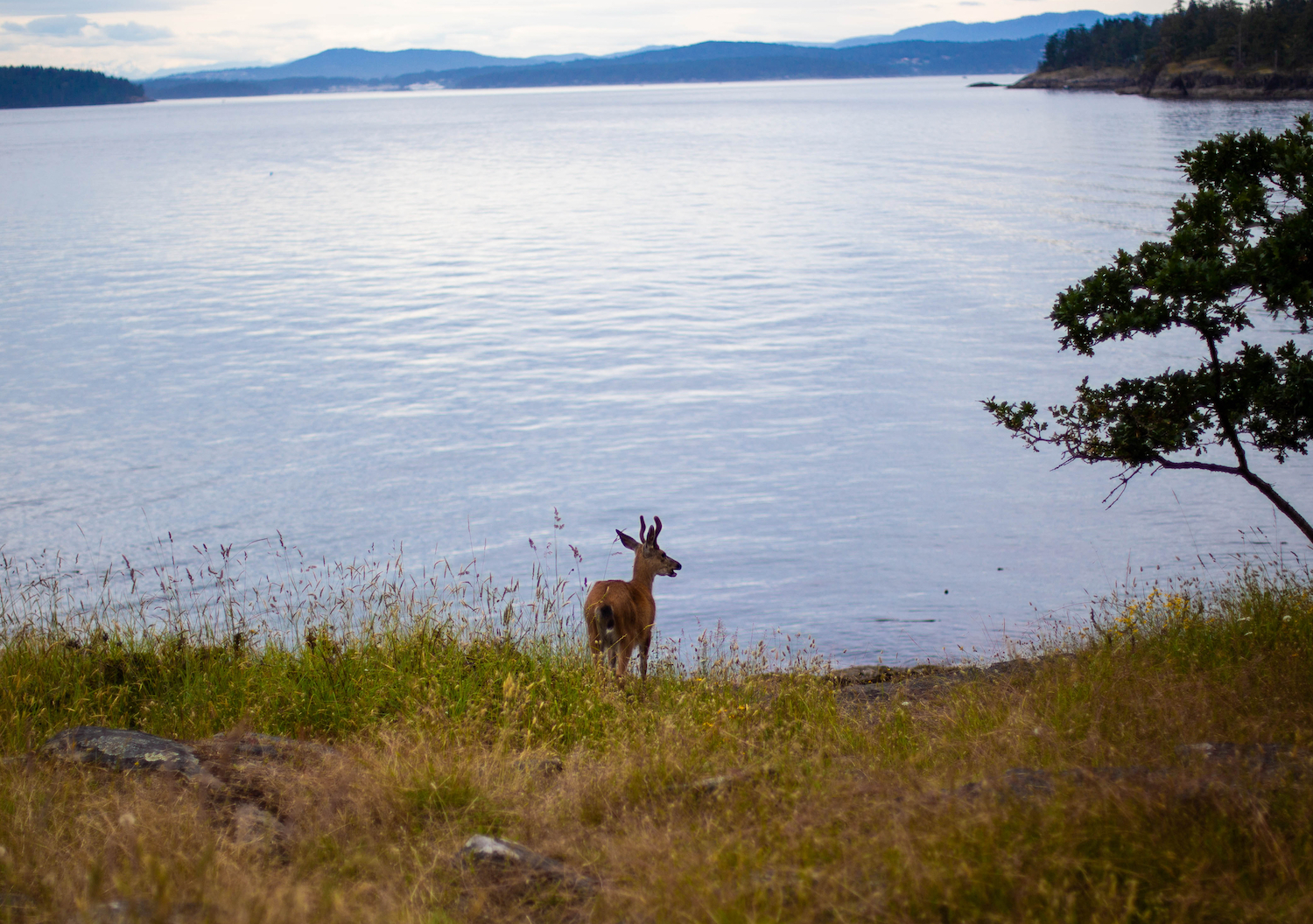
Over the last 50 years, native black tail deer have exploded in population across the islands, including Gabriola, eating through almost all natural plant vegetation and new tree saplings in their wake.
Deer on Salt Spring Island. Photo: Shutterstock
Growing up on Salt Spring Island, Tara Martin remembers the wildflowers, Garry Oak meadows, and understory plants that used to thrive across the southern Gulf Islands short decades ago.
Over the last 50 years, native black tail deer have exploded in population across the islands, including Gabriola, eating through almost all natural plant vegetation and new tree saplings in their wake.
“Imagine in 200 years time, when all this current cohort [of trees] dies, what are we left with? A very very depopulated forest and meadow ecosystem,” Martin told the Sounder.
Martin, who is now an associate professor at the University of British Columbia, runs the Martin Conservation Decisions Lab on Salt Spring and has studied the impact of deer populations on the islands for 20 years.
She says the new generations have no concept of how lush and diverse the islands were, and what was lost.
Stay connected to your city with the Capital Daily newsletter.
By filling out the form above, you agree to receive emails from Capital Daily. You can unsubscribe at any time.
“Each generation inherits a progressively degraded environment, and they accept that environment,” says Martin. “We accept this environment as normal. So the environment that my children arrived at on Salt Spring Island is their normal, even though it looks radically different from the environment that I was born into 50 years earlier.”
When settlers first came to the Gulf Islands, she says they extirpated the wolves and cougars, natural predators to deer. Indigenous people who had been hunting the deer for centuries were also excluded from the islands.
For a time settlers were hunting the deer, however by the 1980s and 90s, Martin says the practice fell out of fashion. Predators are also removed when found on most islands, leaving the perfect conditions for deer populations to explode.
She says most Indigenous medicinal plants, key for pollinators, have now disappeared. Garry Oak meadows today are dominated by non-native grasses and non-native plants, making it very hard to find a big patch of native wildflowers.
“If you go out to these little islets that we work on, where it gives you a glimpse into the past of what these ecosystems were…those islands are still buzzing with pollinators. You’re knee deep in wildflowers,” says Martin. “It makes you weep.”
Martin has looked at a range of options and has found hunting to be the most effective and least-costly solution to keep deer populations down.
Any hunting would be good, but working with Indigenous people on a return to food sovereignty and their own traditional hunting practices could solve two issues at the same time.
Learning to be comfortable with predators on islands is also going to be important. Even allowing one or two would help.
“Ideally we can increase hunting, and do it in a way that empowers local community members and Indigenous hunters, along with educating the wider community that we need to allow cougars and wolves when they arrive on these islands,” she says.
“Allow them to do their job, allow them to hunt deer, their preferred food, rather than shooting them, which is often what happens.”
She says the province has reduced limits on doe hunts in response to her work, but it’s possible they would do more if the public stepped up and there was more awareness of the issue.
Hunting regulations on Gabriola Island can be found on the BC government website here. The limit for hunting black tail deer is one.
It reads there is no open season on antlerless deer on Salt Spring Island or Gabriola Island, although it does exist from Nov. 1 to Nov. 10 in all other areas of the Vancouver Island hunting region.
“Gabriola is no different to any of the other islands,” she says. “...we’ve yet to find a large inhabited island in the San Juans or in the Gulf Islands that does not have this issue.”
Stay connected to your city with the Capital Daily newsletter.
By filling out the form above, you agree to receive emails from Capital Daily. You can unsubscribe at any time.





.jpg)
.jpg)


